Like Him or Hate Him, Elon Musk Is Right About Something

The essence of totalitarian government, and perhaps the nature of every bureaucracy, is to make functionaries and mere cogs in the administrative machinery out of men, and thus to dehumanize them.– Philosopher, Hanna Arendt

Donald Trump and Elon Musk have captured headlines with their brazen attacks on various federal departments and programs. In the name of “cutting waste and targeting fraud and bureaucracy,” thousands of federal workers are being laid off, funding has been frozen and cut off to various programs, and the Department of Education has already been singled out for elimination altogether.

(Source: Getty Images)

Musk even recently boasted about all of this by swinging around a chainsaw at a recent CPAC meeting.

There are of course legitimate and persuasive legal, political and even ethical arguments in opposition to what President Trump and Musk are doing, but something important is being missed in the debate. Much, if not most, of the functioning and management of our government have been disgraceful. Albeit, from different vantage points, much of the public knows this too.

In a larger political sense, what President Trump and Musk are doing is bringing a reckoning to our government system. I, for one, think it’s long overdue. Can I have a chainsaw too?!

Cold, Impersonal Bureaucracies

Musk has been explicit about how tyrannical government bureaucracy is. I’d have to largely agree with him, in a particular sense anyways. Bureaucrats are often impersonal and demeaning as hell. This translates to agencies and services, that they are responsible for administering, that are inadequate and demeaning as hell. Two examples will suffice to help make the point.

The first one involves when I first moved my mom in with me in 2016. I desperately needed to enroll my mom into the county mental health program for seniors. Being on Medi-Cal at the time, we had to wait months for Medi-Cal to be transferred from Kern County, where she previously lived, to Stanislaus County, where we resided.

What was supposed to take thirty days took more than sixty. My mom was suffering from her untreated serious mental illness (SMI). I was stressed out. We were indigent, her being on her SSI and me from taking a leave from my job. When I called the county office for what was probably the third time, I sternly admonished the case worker, after she told me the transfer was done, but not active yet.

I indignantly said, “Why don’t you press some damn buttons and make it active or let me talk to your supervisor?” I heard her press some keys on her keyboard and moments later, she told me, “OK. It’s done.” I shouldn’t have had to make that call. We shouldn’t have had to wait so long.

The second one involves my frustration in trying to get adequate pay for being my mother’s caregiver. For the sake of brevity, just know that Medi-Cal, or what’s called In-Home-Support-Services (IHSS), doesn’t pay much for caregiving. A big reason for that is because they severely limit how many hours they pay for each “caregiving duty.”  
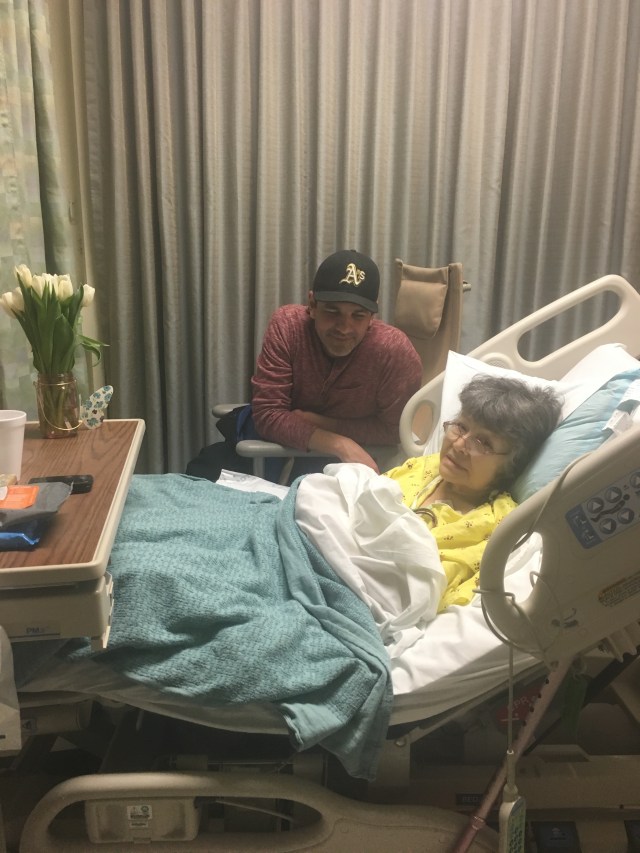
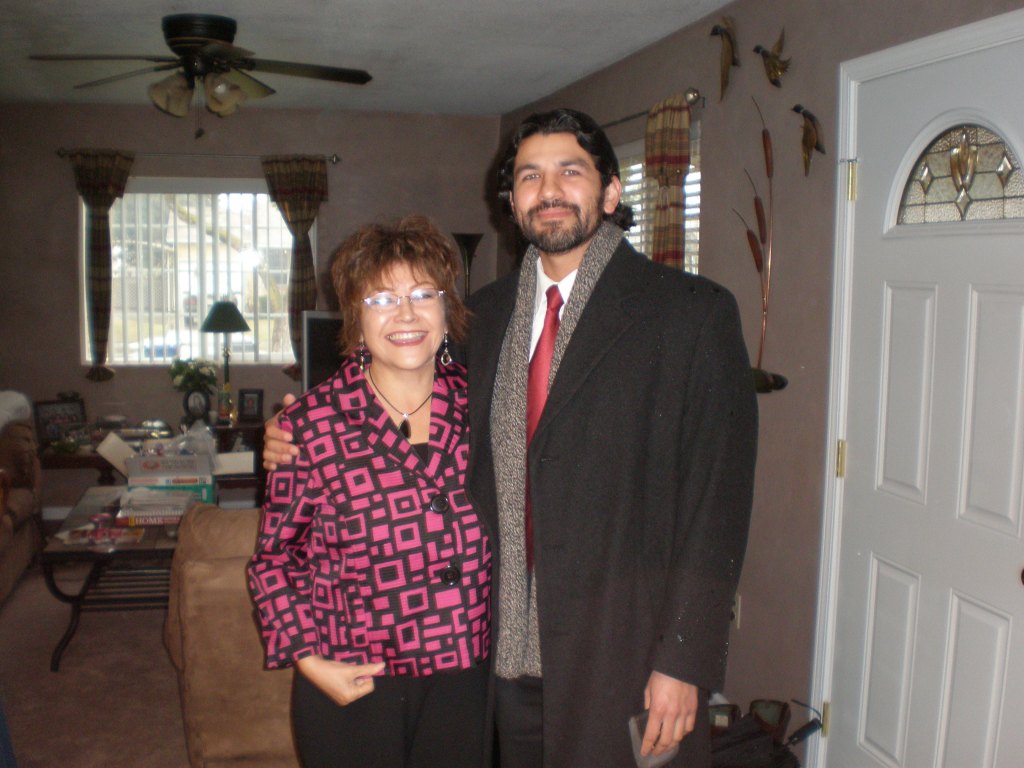
Me and my mom.

To be able “to live” off caregiving, to get paid for 40 hours of work in other words, one must be approved for “protective supervision” duties. Disability Rights California describes it the following way: “Protective supervision is an IHSS service for people who, due to a mental impairment or mental illness, need to be observed 24 hours per day to protect them from injuries, hazards, or accidents.”

My mom suffered from an untreated serious mental illness and would regularly jeopardize her safety and well-being unwittingly. The social worker who interviewed me, however, contorted everything I said, when I gave her examples of what I had to do for my mom, to fit what was clearly a predetermined, disqualifying narrative or script.

When I said I’d have to dissuade my mom from going outside to argue with and/or harass the neighbors, the social worker took that as my mom not needing protective supervision. To the social worker, that was proof “my mom listened to me.” To that, I said, “Well, if she doesn’t listen, then I have to physically try to stop her,” the social worker ignored that part entirely. And what did my mom possibly listening to me have to do with anything? My mom was severely impaired, regardless!

Whether it was that or me having to watch my mom and make sure she wouldn’t leave water running somewhere in the apartment or leave the stove on. Or whether it was having to watch and make sure my mom didn’t throw any of our belongings or her medications away, destroy property, or whether it was waking up multiple times during the night to check on my mom and keep her safe from what she believed were “spiritual attacks,” the conclusion the social worker drew was the same. “So cause your mom listens to you, she doesn’t need protective supervision.” To this, I stated, “Ummm…no. The way I see it. I’m already providing protective supervision and you aren’t paying me for it.”

Needless to say, the county ruled my mom didn’t qualify for protective supervision and I would have my modest savings depleted, as a result. Social worker? Yea right. To me, the woman lost her compassion and care for the people she was supposed to help a long time ago. Instead, she saw my mom as an expense to be avoided. Like an automaton, she advanced the priorities of an unresponsive bureaucracy and was carrying out tasks as if she was programmed.

Indifference and Negligence All Around

County programs and facilities weren’t the only places I experienced gross problems. Hospitals, in one case a private one, were plenty abusive towards and neglectful of my mom. They regularly would try to discharge her prematurely, when she wasn’t even medically stabilized, and would let her or help her leave, despite her being in an acute psychotic state.

Plenty of these times happened in front of me, when I was there acting as her caregiver and “next of kin.” This neglectful and abusive behavior was even more frequent when I wasn’t there, when she was living hundreds of miles away from me. Looking over years of her medical history records showed it being a regular pattern, actually.

President Trump and Elon Musk like to talk about “waste.” Literally, taxpayer money was “wasted,” since my mom would just end up returning after being released from leaving a hospital. She wasn’t stabilized, so her condition would just exacerbate again. It was like a revolving door and got to the point where she was being admitted to hospital emergency rooms, on average, one to two times a month.

Elon Musk (and President Trump by extension) is questioning the value and work ethic of federal workers. Well, I question the value and work ethic of many healthcare workers. I have witnessed firsthand many act unprofessionally and unethically, and many simply aren’t very good at their jobs.

Case in point; towards the end of her life, my mom was hospitalized, after she stopped going to dialysis. A hospital social worker came by the hospital to talk to us and, upon me mentioning I worked in San Francisco, the social worker started commenting on how much San Francisco, in her own words, “smells like pee and is so dirty.”  I’m trying to have a serious conversation about my mom’s fragile health and this is what she says?!  

Minutes into talking about my mom’s psychiatric history, my mom’s kidney doctor walks in and straight up asked the social worker, who had the authority to determine a patient’s mental capacity, if my mom could make decisions for herself. Without even talking to my mom, who happened to be sleeping just a few feet away from us, the social worker said, “No because she has a serious mental illness and is not competent enough.” At that point, I was put in charge of my mom’s medical care.

I was relieved and grateful for that, since my mom didn’t have capacity, but the social worker didn’t follow hospital protocol. In fact, when she brought me a document to sign, giving me decision-making authority, she said, “Your mom has the Right to reverse the decision to put her in hospice care.” I knew what she was saying was untrue and felt like she was just trying to “cover her ass” if need be. I looked at her straight in the face and said, “No she doesn’t. Her doctor was right there as a witness and heard what you determined.”

“Burn It All Down”

So let’s be real. It’s not just the federal agencies and departments that are the problem. State and county governments share the blame and private industry does as well. Given that, I propose 25% of mental health care workers, both government and nongovernment employees, be fired! (Why shouldn’t I be taken as serious as Musk?) And what’s the point of having mental health services and laws available if they aren’t even going to be used to actually help people? As my mom’s kidney doctor said, “Your mom needs psychiatric treatment.” “No shit, doctor!” I exclaimed.

Authorities and healthcare workers should have been more honest and just told me the system isn’t setup to help my mom, instead of trying to give me advice or pretending like there’s actual care. For example, I was explicitly told by a Behavioral Health administrator that they could do more for my mom if she became homeless. Well, she did become homeless, living in a car, and they still didn’t do shit! In fact, a government worker with the California Department of Health told me my mom “technically has a roof over her head” cause she was living in car. Fuck the system all to hell!!!!!  Who is with me?!!!!!

(My solutions are different than Trump’s and Musk’s. Stay tuned for part II…..maybe.)

Featured

Dealing with Adversity: Aikido, On and Off the Mat (Part III)

(This is part three of a three part series. Here is Part I and Part II)

And this is to say nothing of how hard it was for me and my mom to find collaboration and harmony between us. She actually did not believe she was really ill. She thought satanic forces were responsible for her deteriorating health.

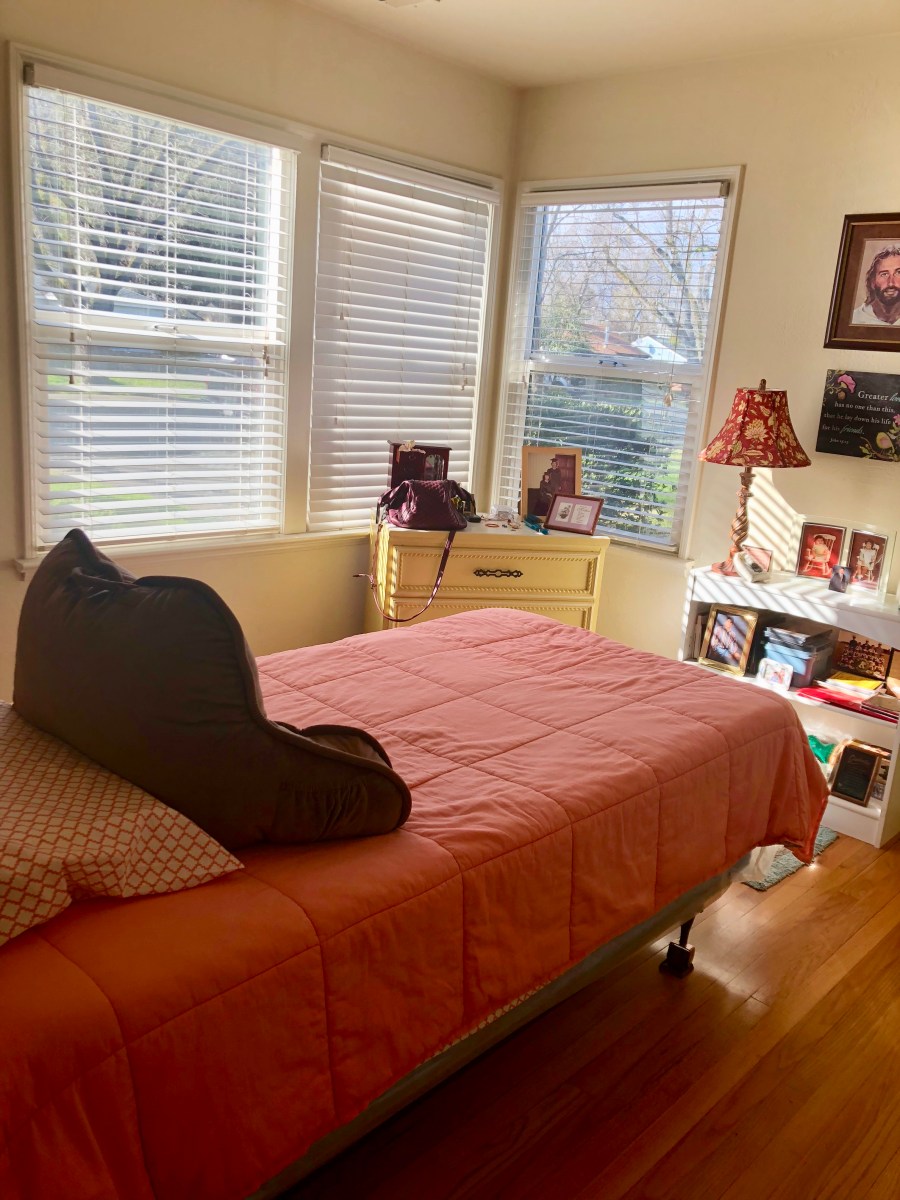
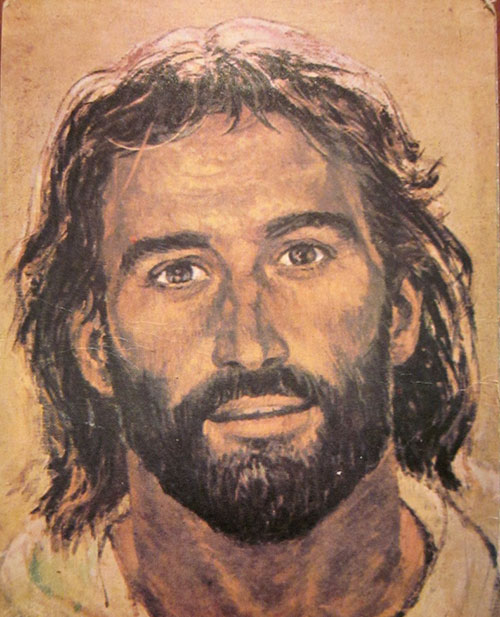
An image of Jesus my mom had in her bedroom

She, also, heard and conversed with voices around 80% of the time. Some of those voices she said were “evil voices” and some of those voices she said were biblical figures. One, she even believed was God’s. Between me and what she believed was “God’s voice”, who was she going to listen to when “the voice of God”was telling her one thing and I was telling her something different?

These conflicts could happen over mundane matters, like when shopping for clothes, or life and death matters like when she would stop taking her medications and put her life at risk. As her health deteriorated, my mom became more critical about living with me too. Sadly, I would come to consider a day of minimal talking between us to be a “good day.” This was no way for us to be living.

My Mom Was a Black Belt Before I Was

My mom would reach a point in 2015 where she would be hospitalized at least once a month, due to her declining health. Thankfully, the frequent hospitalizations would cease once she moved in with me in 2016. Somehow, in no small part due to persuasion and pressure from me, she would agree to adhere to enough of her treatments for her physical ailments to stabilize. Her kidney disease would still continue to worsen, however.

In February 2018, my mom would succumb to her kidney disease, sadly. As heart breaking as the entire ordeal was, it was a testament of her resiliency and fortitude that my mom did not take her own life. According to research, people with severe mental illness have a suicide rate 20 times higher than the general population. I dared not ask my mom, because it would have caused me more anguish and pain, but I am sure that the “evil voices” told my mom she should kill herself. She would tell me, at times, other denigrating and threatening things they would say to her, after all.

My mom suffered immensely, an unimaginable amount, but she was a warrior, through and through. She wanted nothing more than to reconcile with her family and, rather than be estranged from her family, to live with family, particularly me or my sister.  She fought every day against “the dark forces” that she believed were responsible for her situation and trying to harm her and even kill her.

When I received my black belt, a lot of people, including my first Sensei, Penny Sablove, told me how proud they were of me, since it showed a lot of resilience and fortitude on my part. My training was derailed and even put on hold for several years, due to my family situation, but I persevered. This paled in comparison with what my mom went though, though.

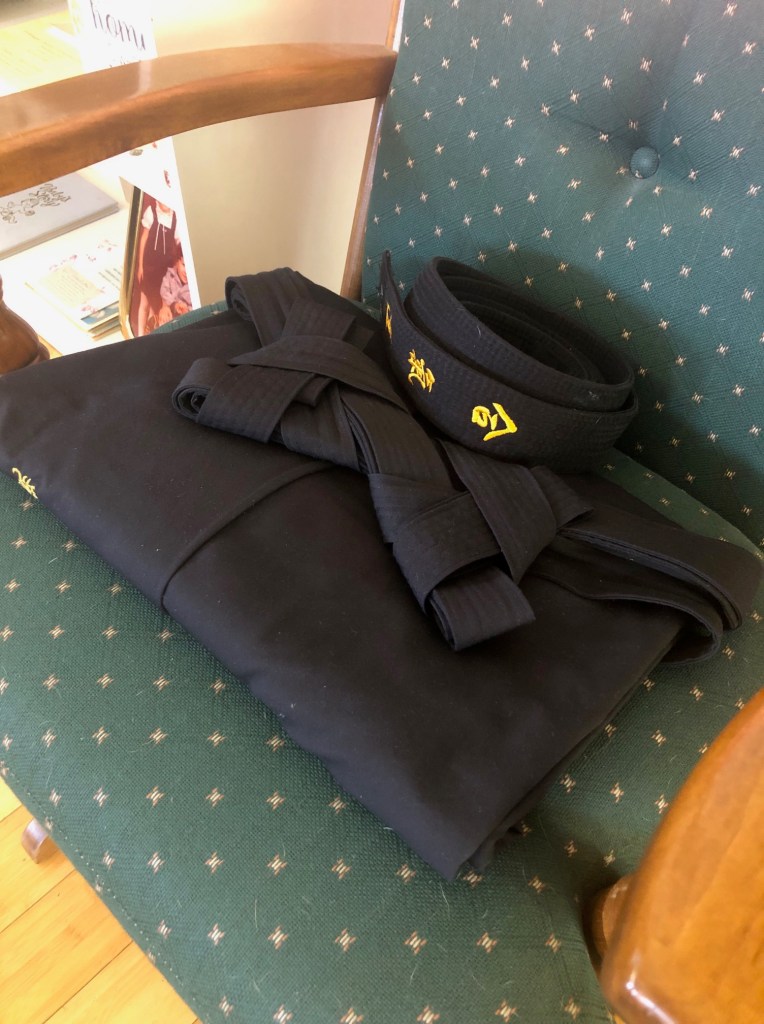
My black belt and hakama on my mom’s chair

Thus, since receiving my black belt, I regularly place my black belt and my folded aikido hakama on her chair, the one she bought shortly after moving in with me, in honor of her and to collect her ki. I told her when I first placed them there: “You were a black belt too, mama. You earned yours before I did.”

As I have explained, aikido is in essence about finding harmony, and I did that in trying to help and take care of my mom the best I could. The disappointments, traumas and real instances of discrimination, neglect and maltreatment did not allow for much “ai-ki”, however. In those instances, to just “accept” or “look for the positive in the negative”, as some simplistic adages go, would have been tantamount to accepting gross injustice and even oppression. No, in such situations, more assertive aikido is necessary and “incapacitating” an attacker might be the only option in them.

What remains the same, though, in this “style of aikido”, what was present in what I did for my mom was to lead with LOVE. That included the times when I had to make decisions in her “best interest”, the hardest one being when I had to decide to put her into hospice care.

That LOVE helps me live in the aftermath, as well, as I know it got me through what was an impossible situation in caretaking. Without those last two years of my mom, I honestly do not think I could live with myself. My mom would have died estranged from her family and in a hospital or in the streets alone. The grief from that would have been unbearable.

Aikido has shown me there is a better way to live and how to live with one’s principles and integrity intact. I can only hope others are finding it as transformative for them as it has been for me.

Dealing with Adversity: Aikido, On and Off the Mat (Part II)

(This is Part II, to a three part article. You can find Part 1 here: Part 1)

In plain language, I was getting my ass kicked, as if three ukes during randori were successful in tackling me and taking me to the ground. It was an ugly feeling and I knew that something had to change. I decided to take a leave from my teaching job, in order to get a handle on my health…and to find my balance. I moved in with my dad, back to my hometown of Fresno, CA, and used the time off work to get ample rest and do things that I enjoyed.  

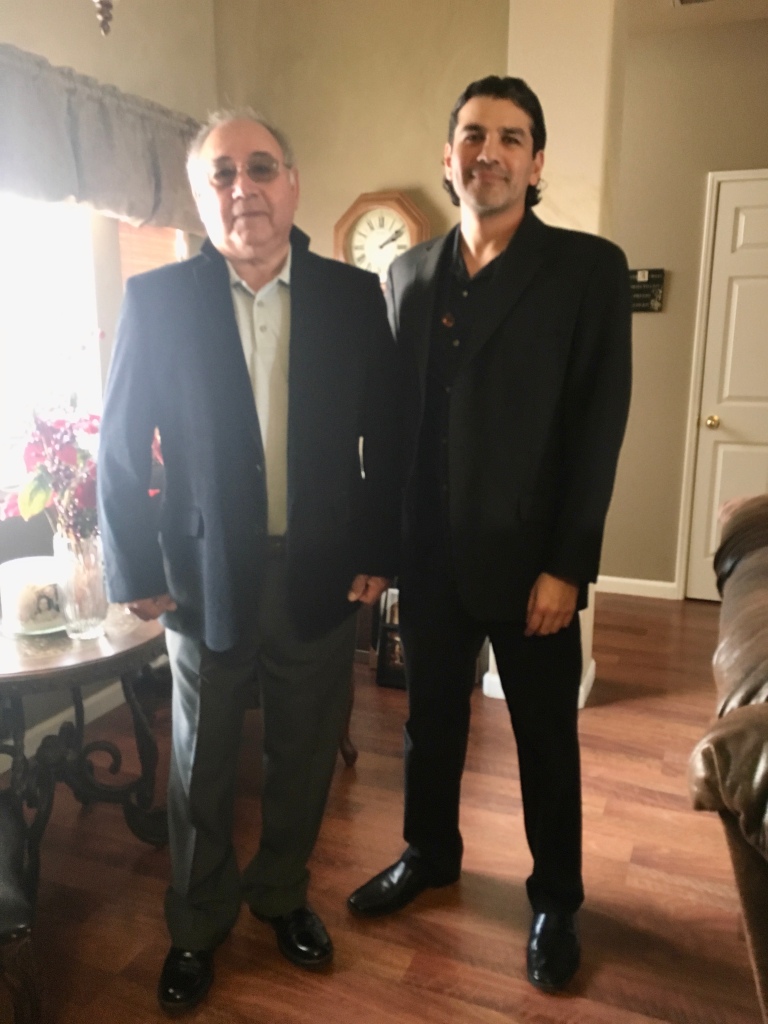
My dad and I dressed up to watch a show.

I went fishing as much as I could, exercised at the gym a few days a week, meditated, trained at the local Aikido dojo and made sure to take naps. I, also, enjoyed being around my family more. In fact, it was the first time, since I moved away from college, I was able to spend regular quality time with my dad. While I felt guilty about it at the time, I didn’t spend a lot of time with my mom, however. Being around her was just too stressful and sad.

After what would be a six-month break, I gained my weight back and my panic attacks even stopped. I had stopped taking the anti-depressant I was prescribed before I took my leave, since I didn’t think it was working well enough. I was hoping time off work and doing adequate self-care would be more effective in helping me and I was right! I promised myself I would never get as overwhelmed ever again.

2013 arrived and I was back working and living in the Bay Area. Fortunately, for my family, my mom would find regular housing, however temporary, starting that year. This would reduce my stress of course, but there would still be plenty of crises times and they would take a myriad of forms.

As I had been doing for years already, I talked to my mom almost every day to monitor her and express my love and support. My sister and I would drive hundreds of miles to visit her on special occasions, like her birthday, and holidays, like Thanksgiving and Christmas. And I would do my best to advocate for her at times of crises. Trying to get my mom adequate care and treatment at hospitals would become a regular occurrence, as her physical health steadily deteriorated.

In 2013, my mom was hospitalized after experiencing dizzy spells and a possible stroke. I took the four-hour drive to Bakersfield to be by her side. Fortunately, her attending doctor was responsive and assuring. The same can’t be said for the hospital administration, however.

My sister visiting our mom in the hospital.

The attending doctor wanted my mom to start taking insulin. There was one problem with that, though. My mom had recently developed cataracts. She needed assistance, since she was unable to administer insulin shots to herself. To my relief, the attending doctor referred my mom to an assisted living facility, as part of my mom’s treatment plan upon discharge.

The day after I returned to San Francisco, however, my mom told me they hospital was getting ready to discharge her back to her apartment. I was stunned and angered. I called the hospital and asked to speak to the main administrator.

Now, while my aikido training helps teach me stay “centered and relaxed” when dealing with stress and conflict, ultimately, we train in order to avoid conflict and create harmony with things around us. In fact, aikido translates to “the way of harmony with universal energy or spirit.” With aikido training, like in randori, we try to “harmonize” with the energy of the ukes and redirect them in order to minimize harm and produce a better outcome for all parties.

Applied to day-to-day life experiences, this means we should try and find compromise and mutually beneficial arrangements with people we experience conflict with. However, as I’d experience countless times, too many healthcare workers and authority figures were not only indifferent to my family’s plight, but too many were more than willing to jeopardize my mom’s life. They would do this even when it violated their own workplace policies and the law.

Given this, there was no “harmonizing” in these situations, since our interests were so diametrically opposed. I wanted and needed immediate help and support for my mom. Like all human beings, she deserved to be treated with dignity and respect. In contrast, too many healthcare and government workers treated her as an inconvenience, or worse, a drain on their time and society’s resources.

At times, I would assert myself strongly, from day one of a hospitalization, by letting hospital personnel know I wasn’t going to accept premature discharges of my mom. Hospitals had no qualms about doing so.. I’d even threaten hospital personnel, county workers and even the police with lawsuits or negative media attention when they’d refuse to give my mom, or take her in for, proper medical care (I just started filming and recording my interactions with healthcare and governments workers, I got so fed up.).

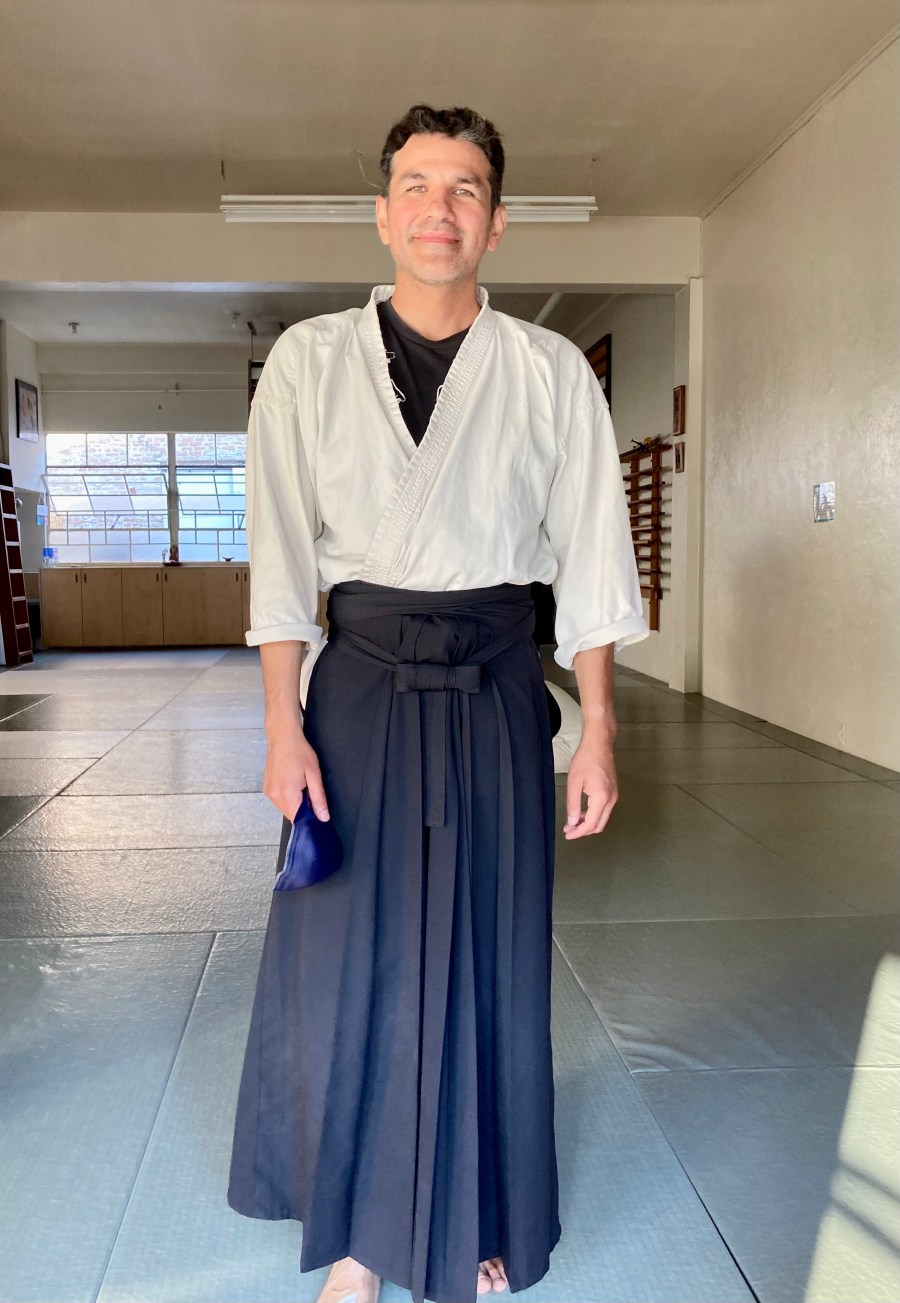
Sensei Jaime Calderon showing how to use an “atemi.”

Asserting myself in these ways could be seen as forms of escalation, which is not very “aikido like.” In a famous quote, the founder of aikido, Morihei Ueshiba, said, “To injure an opponent is to injure yourself. To control aggression without inflicting injury is the Art of Peace.” I considered things that I did or said as being consistent with aikido principles and values, though. In aikido, we use what are called “atemis.” They are strikes to knock an attacker off balance, in order to create space and the opportunity to execute a technique or throw. When it comes down to “life and death”, I think strong atemis are essential. I delivered strong atemis whenever I could to protect my mom and I didn’t, nor do I still, feel bad about it.

— To Be Continued —

Dealing with Adversity: Aikido, On and Off the Mat (Part I)

A few months ago, in August, when visiting my extended family in Bakersfield, CA, to my surprise, two of my older cousins asked me to show them some self-defense techniques. I have been practicing Aikido for many years, but they have never asked me to do that before when visiting. The difference is I recently earned a black belt. Being a black belt confers considerable respect it seems.

I indulged my cousins by showing them a few techniques. They especially liked a deflection I showed them off a punch. When Aikido techniques are done proficiently, the force or energy of the “attacker” gets redirected and there is a moment the attacker is off balance and vulnerable. My cousins thought my deflection from a punch was “way cool.”

While Aikido can be used for self-defense, experienced Aikidoka (i.e. Aikido practitioners) know it is more useful than that. Aikido can, also, be used in everyday life. For me, what I went through in trying to support and get help for my gravely disabled mother felt like a marathon version of what we call “randori” in our training.

An Aikido Demonstration of Randori

Randori consists of multiple attackers (the “ukes”) going after one person (the “nage”). The goal of the nage is to avoid being stopped or taken down. The stress and chaos one can experience as nage can be intense. I have trained at some dojos where ukes are expected to run full speed and tackle the nage.

Randori is the most challenging part of Aikido training. Some would say it is “the essence of the training”, as it requires proficiency in many areas of Aikido to be successful. For even a highly skilled black belt, dealing with multiple ukes, typically three or four, constantly attacking gets tiring, physically and mentally. Indeed, seeing my mom’s physical and mental health worsen over the course of many years felt like a pummeling. Some key events will make the point:

  • In 2007, my mom starts having auditory hallucinations and, at times, exclaims to me and other family members that people are inside her apartment and trying to kill her.
  • In 2010, my mom becomes homeless, living in her car, due to not being able to find a rental because of past evictions.
  • In 2012, my mom falls in a bathtub and fractures her back. Shortly before that, she fell down on a staircase, saying “evil spirits” pushed her down.
  • In 2014, my mom’s physical health begins to greatly deteriorate, due to her medical self-neglect. Regular hospitalizations would begin to occur.
  • In 2015, the week of Christmas, my mom would be medically neglected and abused by a hospital in Kern County. Against my wishes, my mom was unsafely discharged, though she was in an acute psychotic state and could not even walk.
  • I moved my mom in with me in 2016 and would leave my teaching job to be her full-time caregiver. That summer, we would find out my mom had kidney disease and her kidneys were functioning at just 30%.

To be successful in randori, a nage must effectively keep their balance, maintain proper posture, and stay calm and relaxed. Seeing my mom suffer and being pretty powerless to help her, despite my best efforts, taught me the importance of being able to do these things in real life.

Keeping Balance and Maintaining Proper Posture

Me, working hard on having proper posture.

In randori, a nage must move decisively and efficiently in dealing with multiple attackers. A stumble or just being knocked off balance can lead to a nage being taken down. One just need think of how important balance must have been for an ancient samurai on a battlefield. Against many enemy samurai, if a samurai lost his balance in battle, his diminished ability to move or respond could prove fatal.

Proper posture means proper alignment and finding and maintaining balance is virtually impossible without it. To help students visualize and feel proper posture, my Sensei likes to say “imagine a vertical line going straight up and down through one’s center, perineum and head.” Another Sensei tells us to “expand our chest and shoulders and drop our tail bones” to find proper posture.

Maintaining balance and proper posture allow nage to perform technique more effectively, since uke’s energy is redirected and shaped by nage. Proper balance and posture, also, allow nage to better see the “lay of the land”, which opens up the choices available to him or her, essentially.

Stay Calm and Relaxed

Aikido is sometimes called “meditation in motion” and for me, that is certainly true. I discovered at the beginning of my training, back in 2009, that I needed to relax my shoulders in order to let “ki” (i.e. energy) an uke was giving me to flow more freely through and around me. Tension or “muscling up” blocks the energy and can even make it easier for an uke to resist and/or use more force against a nage.

If an uke is stronger than the nage, then the nage is obviously going to be at a huge disadvantage if a physical struggle ensues. And regardless of physical differences, in a randori, any moment of struggle between nage and an uke allows the other ukes to get closer and strike or grab the nage. “Freedom of movement” through relaxation is integral for success in randori.

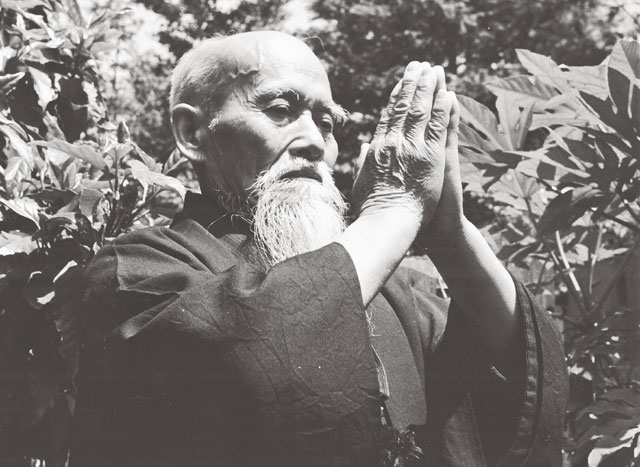
O’Sensei the founder of Aikido, in meditation.

Staying calm and relaxed helps nage be more “present” or “mindful” also. When present, a nage is able to be more attentive and sensitive to his or her surroundings. Indeed, in such a state, the senses are keen and the emotions and even intentions of others are more discernible. From a research paper on “mindfulness”, “The concept of mindfulness….[involves] a highly receptive, nonjudgemental awareness of and attention to whatever is present in the moment – whether pleasant, unpleasant or neutral.”

In terms of execution, a mindful nage is able to make better decisions and act more appropriately, based on the circumstances. Frankly, sometimes the correct response to an uke’s attack can be “soft” and other times it can be “hard.” The nage needs to be able to respond with each and, also, discern when each is appropriate.

Aikido in The Real World

I am pretty proud of my aikido in everyday life today, but there have been numerous times when I have been overwhelmed and distraught in the past. Nobody will be surprised to learn that I ended up hitting some very rough patches, or low points, particularly when my mom was homeless for two years living in her car

Between 2007, when I first started trying to get help for my mom, and 2012, when my mom was in her second year of being homeless, I consumed too much alcohol, had trouble sleeping, had bouts of high blood pressure and started experiencing panic attacks. The stress and worry were too much for me. My doctor would eventually recommend taking an anti-depressant. I vividly remember taking the medication for the first time. As I looked at the pill in the palm of my hand, I thought “I can’t believe I’m taking a psychiatric drug before my mom is.”

–To be continued–

5 Years Have Gone By (Video Tribute)

Two weeks ago, Monday, February 27, was the fifth anniversary of my mother’s passing. It’s a bit surreal, really. It doesn’t feel like five years. It feels more like two. The first year, after she passed, I was definitely just in “survival mode.” I somehow managed to live in the same house I shared with my mom a year and a half all alone. The silence, with my mom being gone, especially at night, gave way to the cacophony of my mind. I learned relatively quickly I was suffering from PTSD.

Since, my emotional and psychological well-being have improved every year, but in some ways, the anger is more palatable. I’m angry my mom and family had to suffer for so long and how we are still suffering. My sister and I miss our mom tremendously. My mom was only 66 years old when she passed. I was only 42 years old. My mom was extremely proud of everything I accomplished in my educational and professional life. But she still never really got to see the person who I became. After all, I couldn’t be fully revealing about my thoughts and opinions and different aspects of my life. I didn’t want to cause her undue stress. I definitely didn’t want something I said or was doing to be integrated into her psychosis and become a source of pain and conflict for her or me or us.  

One of these days, maybe I’ll write more about my path of healing (And through a fucking pandemic even!). For now, I felt what would be best for recognizing the fifth year was to make a video tribute of my mama. Even more than what I was able to show in my documentary film, I think the video shows just how vivacious, eloquent and radiant she was. And despite how crippling her severe mental illness was, her personality traits and love for her family remained. I wish I could have valued that and realized that more at the time. We love and miss you, mom!

Personal Post: My Aikido Journey

I am hardly posting on my blog, for different reasons. One, work keeps me plenty busy. But I, also, am having a hard time balancing my advocacy, work and personal hobbies. That said, I will be sharing some news about a recent public event I participated in in Modesto, CA. It was the first time my film, “Benevolent Neglect”, was shown in a theatre!

With this post, I’d like to share some important personal news. After an intense amount of training this past year, I was able to finally receive my Black Belt in Aikido. I started training 14 years ago, around the time I first started trying to get help and treatment for my mom. Needless to say, dealing with my mom’s longterm medical crisis and housing insecurity derailed and delayed my training. I started training regularly again in 2019, but then the Pandemic hit! Well, I finally persevered and I know my mom would be very proud of me!

Here’s a video I made of my personal journey in Aikido. I incorporate the personal journey with my mom a little bit.

Mom Is Gone Now and Politicians Are Still Unhelpful

I’m doing what advocacy I can still, though it is very slow moving. Most recently, I contacted a couple of California State Representatives to let them know I’m available to provide testimony for legislation related to treating people with severe mental illness (SMI). Improving access to treatment and care for people with SMI is getting more attention these days, due to the homeless crisis here in CA. However, as was the case when my mom was alive and we’d try to get her help, politicians and their aides are showing little interest in helping or listening to me. One of the aides of State Representative Buffy Wicks (District 15) actually asked me what my credentials were, when talking to them on the phone! As a political scientist, that perplexed me. As a citizen and tax payer, that disgusted me. Politicians need to be more responsive to their constituents, regardless of status.

I’m “playing the game” for now. But I’m not above harassing them to get a meeting. Below is a copy of a letter I recently sent to Representative Miguel Santiago (District 53), as an example.

Dear Representative Santiago,

I am writing to you because I would like to give testimony for bills and proposals related to the treatment of people with severe mental illness (SMI). I understand that there is currently a bill, AB 1340, that you are sponsoring that is scheduled to be discussed in January. The bill, as I understand it, would amend/modify “Grave Disability” criteria that is a part of the 5150/LPS process. I am highly interested in providing testimony for that proposal, given that I have unique experience and invaluable knowledge in dealing with the 5150/LPS process.

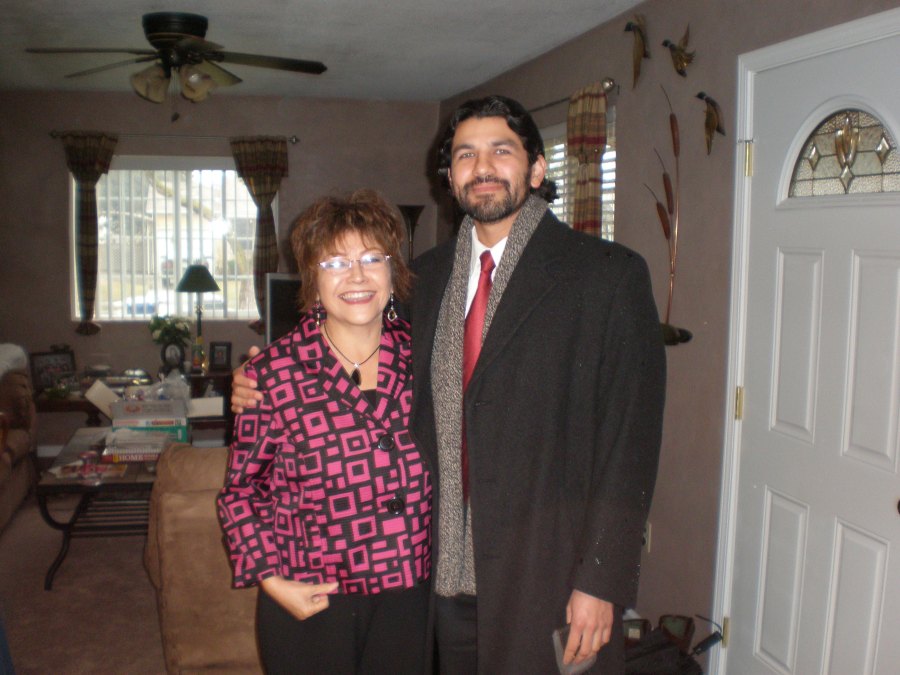
A photo from 2009 of mom and I before we appeared in probate court. I was her conservator for a short time.

Professionally, I am a community college teacher and a Political Scientist. I have been teaching full-time at City College of San Francisco since 2005. I am, also, an advocate for people with SMI and a former caregiver of a family member with a SMI. My mother, a second generation Mexican-American, began exhibiting signs of a serious mental illness around 2002. I started to play a direct role in trying to get her help and treatment in 2007. By then, as a result of no treatment, she was having hallucinations and not taking care of her medical/physical needs, particularly her diabetes. Despite my family’s best efforts, my mother would spend the last 1/3rd of her life with an untreated SMI. In my experience with the mental healthcare system, as my mom’s advocate and caregiver, I largely blame the 5150/LPS process for her needless suffering and premature death.

I found out relatively quickly how difficult it was to get help for my mother, when I began advocating for her in 2007. Though my mother would be 5150ed various times, between 2007-2009, I was told by representatives in both San Francisco County’s and Fresno County’s Behavioral Health Department that it would be easier for them to take her in and treat her if she were homeless! “Really?!”, I thought. “How unconscionable!” I had to get both counties involved, since I was living in San Francisco and my mom was primarily in Fresno, at the time.

Starting in 2010, the unimaginable would happen. My mom would end up homeless, living in a car, due to multiple evictions from apartments. At times, when we could, my sister and I would try to have her 5150ed, out of desperation. She’d show up at our houses exhausted and sick from lack of sleep and rest, and failing to treat her diabetes. The police would show up and, each time, refuse to 5150 her. Though homeless and obviously ill, they would judge her to not be “gravely disabled.”  They would essentially tell us, “She has to be lying naked in urine and feces on a railroad track” for her to meet “gravely disabled” criteria. In these experiences and more, what became clear to me is that her living in a car was considered “adequate shelter.” My mom barely having any clothes to wear, even in Winter, was still viewed as “adequate clothing.” Though she was diabetic, eating primarily high fat and high carb food was viewed as her being able to “adequately feed herself.” My mom having an official diagnosis of schizoaffective disorder did not matter to them. Each time, they would conclude she was “competent” and able to make decisions for herself.

To me and my family, this was an outright neglect of duty by these police officers. Eventually, in 2018, she would develop stage 4 kidney failure. A Modesto police officer took this institutionalized neglect and, really, cruelty, to a new level when he refused to 5150 my mother in January of 2018, when she stopped taking her medications for various serious physical conditions. My mom was in the midst of an acute psychotic episode and stopped taking her medications because “God told her they were poison.” Going on day four, she was unable to eat or drink anything. She did not have an appetite and would puke up anything she tried to drink. She was demonstrating organ failure. Despite this, the police officer determined she did not meet 5150 criteria. My arguments to the contrary and pleas for help fell on deaf ears. The police officer, like many before him, ruled my mom was “competent” and able to decide for herself if she wanted to go to the hospital. My mom could have died at the house. The police were willing to let her die. Fortunately, however, from the urging of other family members, my mom would agree to go to a hospital later in the day and be medically/physically stabilized.

All of this is to say nothing of other times the 5150 process and various authority figures and officials failed my mother. I detail this some in a documentary film I made in 2020 titled “Benevolent Neglect.” It is available for viewing on YouTube. (A film trailer is available for viewing here: https://youtu.be/ta08Lo3ULqo ) With this letter, I have focused on the problems my family has faced with how “Grave Disability” is interpreted and applied. It is too NARROW. Dr. Julea McGhee, who is the emergency room psychiatrist in my film, told me this.  She said the problem is insurance companies determine what constitutes “Grave Disability” and that they intentionally define it narrowly. In her opinion, many more people should fit the criteria for “Grave Disability” than actually do. I understand that AB 1340 would amend “Grave Disability” to include “medical self-neglect.” I strongly support including “medical self-neglect,” as my mother’s frequent hospitalizations and deteriorating health were undoubtedly the result of her severe mental illness. As I think I demonstrated, I can speak on this with considerable knowledge and authority. I have much more I could say and contribute in this discussion and debate. Thank you.

Mom, I Need Someone to Talk to

This past Friday, the 27th, marked three years and six months since my mama passed. For a time, I’ve been wanting to write a post, a fictional piece, on what it’d be like to have a heart-to-heart conversation with my mama. I figured I’d do it now. What would make it fictional? Because in my fantasy, my mom would be well. She wouldn’t be suffering mightily from her untreated serious mental illness like she was for the last 1/3rd of her life.

By the time I was 24 years old, my mom was beginning to show signs of her serious mental illness. As time went on, and it went untreated, I would have to be extremely careful about what I shared with and told my mom. For one, I didn’t want to cause her any more stress. A stressful situation or event could induce an acute psychotic episode. Two, it could cause conflict with us in some way, since she could integrate anything I’d tell her into her delusional world. For close to a decade, she’d often implore me to quit my teaching job in San Francisco because she didn’t want me to teach “in a city with Satanists,” for example.

Christmas, 2007

As a grown man, I could have used my mom’s support and advice about such things as work and relationships. I didn’t get that, though. Not the way I should have, anyways. So here is what I imagine a conversation would be like with me and my mom if she was of sound mind.

Me: “Work is a drag. They are cutting our pay substantially. But, of course, I still have as many students as ever in my classes. I’m never going to be able to buy a house in the Bay Area at this point. I’m fed up. The situation sucks the joy out of teaching.”

Mom: “Those devils. They certainly don’t appreciate the work you do as a teacher. You should pray on it and think about what you want to do. And, you know, it’s not too late to go back to school and get your Ph.D!”

Me: “I know, mom. But I don’t want to go back to school. Academia isn’t really for me. I don’t want to be a poor college student again and I can’t really stand the culture. It’s too snobby.  I’ll try to stick it out at work a little longer. You remember how happy I was when I received the job offer?”

Mom: “Yes, of course. And your father and I were very happy for you. I tell everyone I talk to that you’re a community college professor.”

Me: “I know, mom. I was just starting to make pretty good money too, after 15 years of teaching. If I knew when I was 20 years old how much I’d be making, at least before the pay cut, I’d have been thrilled.”

Mom: “You’ll be a success no matter what you decide you want to do.”

Me: “Yea. It’d be nice to find something without the long work hours. Maybe I’ll move back to Fresno soon enough.”

Mom: “That would be nice for your father and I. But what about your female friend? What’s her name again? Stacey?”

Me: “Yes. We aren’t seeing each other anymore. I broke it off before it could get too serious. She was hinting at wanting something exclusive. Ever since my relationship with Marie, I’ve had trouble opening up to women I’m dating.”

Mom: “That relationship was not healthy for a large portion of the time you two were together. That was, also, some time ago now, though. I know your father and I argued a lot in front of you and your sister when we were married, but we did try, as you know. You should try not to repeat our mistakes.”

Me: “I know, mom. You made us go to family therapy. I didn’t appreciate it or really get it at the time, but I think it was admirable and smart for you to do, looking back.”

Mom: “Yes, therapy helped a bit, but your dad was set in his ways and emotionally shut off. He changed when he came back from Vietnam.”

Me: “Yea, when you first told me that, I wasn’t sure whether or not to believe you. But then cousin Melissa confirmed that you said that about dad back then. Whatever it is exactly, it prevents him from even listening to me when I want to talk to him about important things, unless I demand it. I practically have to yell at him to listen to what I have to say sometimes. It’s going to be hard on me if you end up passing before dad. He doesn’t understand me or just the world like you do.”

Mom: “Your dad has a big heart. Just try to be more patient with him and watch your tone when you speak to him. You get impatient quickly with people.’

Me: “I know… that’s what Marie said. That’s what Stacey says. That might be a little bit of what I picked up from dad growing up. I’m trying to improve that.”

Mom: “Maybe go see a therapist. Hahaha”

Me: Maybe…Are you proud of me, mom? At the man that I’ve become at 45 years old?”

Mom: “Yes, of course! Why are you asking me that?!”

Me: “Cause I’m a very different person than I was 20 years ago, even 10 years ago. I have a demanding job with a lot of responsibilities and, I’m not complaining about this, but those years I had to help you when you got sick were hard on me. I feel like I didn’t really enjoy my thirties and now, at 45, I’m single and don’t own a home. It makes me doubt myself.”

Mom: “I’m very proud of you. I couldn’t be prouder. I, of course, wish you would develop a closer relationship with God. But that’s between you and him and I know you try in your way to have a spiritual practice. I think you live by your principles and genuinely care about people and others. And your smart and successful, yet humble and grateful for everything you have. God will continue to bless you because he knows your heart and sees your actions, and I take comfort in that. Knowing he will look after you, even when I’m gone.”

Me: “Well, I’d hope that you’d look after me too, assuming you could from the afterlife.”

Mom: “You may not be sure, but I am. The love I have for you and our family is undying. You’ll see!”

Me: “I know, mom. You are a wonderful mama. You did a great job.”

Mom: “Thank you, mijo.”

First Cut of My Film Is Done!

Hi all,

It took me longer than I wanted, but the first cut of my film, Benevolent Neglect, is completed. I’m circulating it to a small group of people for feedback, but plan on being completely done by the end of August. I wanted to share the news and opening scene with my “followers” on here. You can view it below. Thanks for the support, especially to those of you who have been following my blog for some time now. It never got the attention I would have liked it to, but every visitor and follower mean a lot. I know the story has the potential to resonate with many more, so that’s why I decided to make a film. Feedback, so far, has been very positive.