Featured

Dealing with Adversity: Aikido, On and Off the Mat (Part III)

(This is part three of a three part series. Here is Part I and Part II)

And this is to say nothing of how hard it was for me and my mom to find collaboration and harmony between us. She actually did not believe she was really ill. She thought satanic forces were responsible for her deteriorating health.
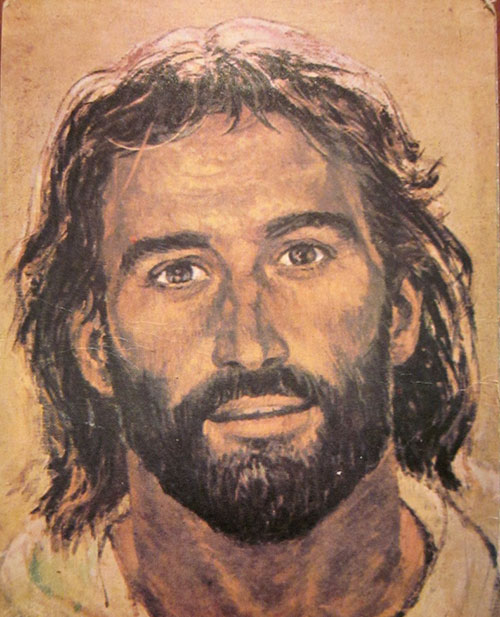
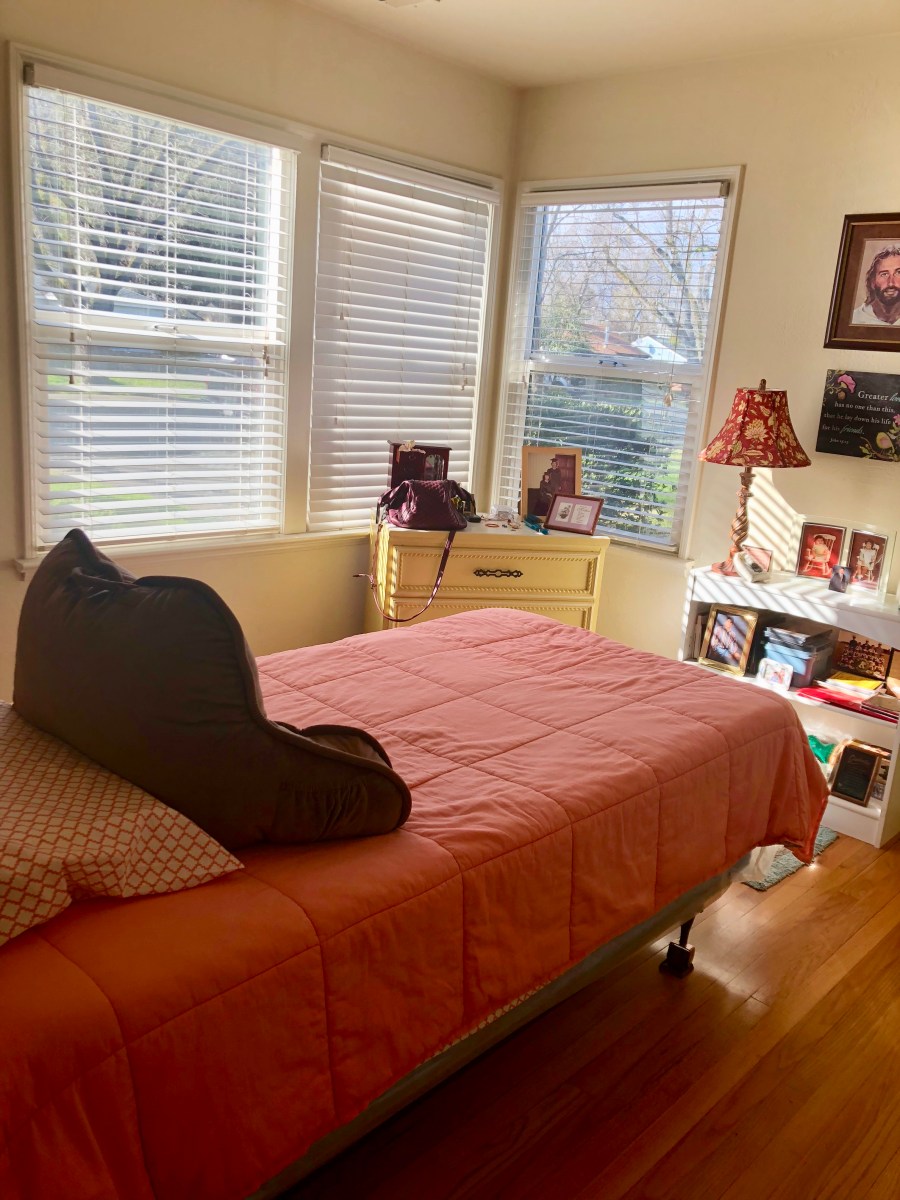
An image of Jesus my mom had in her bedroom

She, also, heard and conversed with voices around 80% of the time. Some of those voices she said were “evil voices” and some of those voices she said were biblical figures. One, she even believed was God’s. Between me and what she believed was “God’s voice”, who was she going to listen to when “the voice of God”was telling her one thing and I was telling her something different?

These conflicts could happen over mundane matters, like when shopping for clothes, or life and death matters like when she would stop taking her medications and put her life at risk. As her health deteriorated, my mom became more critical about living with me too. Sadly, I would come to consider a day of minimal talking between us to be a “good day.” This was no way for us to be living.

My Mom Was a Black Belt Before I Was

My mom would reach a point in 2015 where she would be hospitalized at least once a month, due to her declining health. Thankfully, the frequent hospitalizations would cease once she moved in with me in 2016. Somehow, in no small part due to persuasion and pressure from me, she would agree to adhere to enough of her treatments for her physical ailments to stabilize. Her kidney disease would still continue to worsen, however.

In February 2018, my mom would succumb to her kidney disease, sadly. As heart breaking as the entire ordeal was, it was a testament of her resiliency and fortitude that my mom did not take her own life. According to research, people with severe mental illness have a suicide rate 20 times higher than the general population. I dared not ask my mom, because it would have caused me more anguish and pain, but I am sure that the “evil voices” told my mom she should kill herself. She would tell me, at times, other denigrating and threatening things they would say to her, after all.

My mom suffered immensely, an unimaginable amount, but she was a warrior, through and through. She wanted nothing more than to reconcile with her family and, rather than be estranged from her family, to live with family, particularly me or my sister.  She fought every day against “the dark forces” that she believed were responsible for her situation and trying to harm her and even kill her.

When I received my black belt, a lot of people, including my first Sensei, Penny Sablove, told me how proud they were of me, since it showed a lot of resilience and fortitude on my part. My training was derailed and even put on hold for several years, due to my family situation, but I persevered. This paled in comparison with what my mom went though, though.
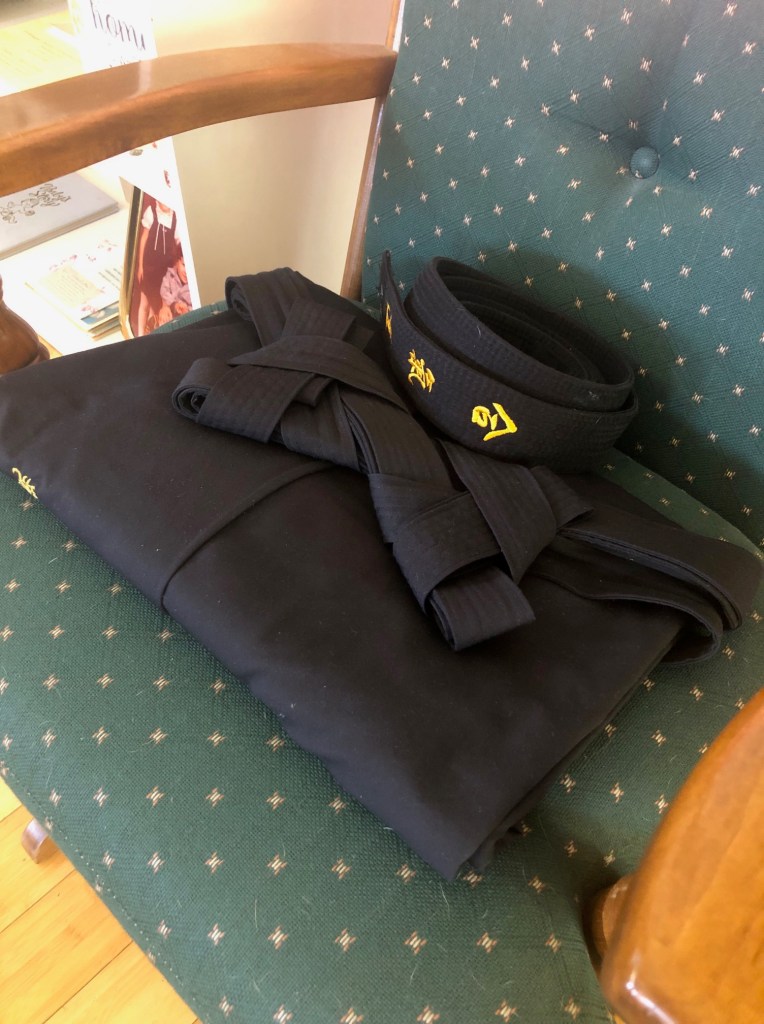
My black belt and hakama on my mom’s chair

Thus, since receiving my black belt, I regularly place my black belt and my folded aikido hakama on her chair, the one she bought shortly after moving in with me, in honor of her and to collect her ki. I told her when I first placed them there: “You were a black belt too, mama. You earned yours before I did.”

As I have explained, aikido is in essence about finding harmony, and I did that in trying to help and take care of my mom the best I could. The disappointments, traumas and real instances of discrimination, neglect and maltreatment did not allow for much “ai-ki”, however. In those instances, to just “accept” or “look for the positive in the negative”, as some simplistic adages go, would have been tantamount to accepting gross injustice and even oppression. No, in such situations, more assertive aikido is necessary and “incapacitating” an attacker might be the only option in them.

What remains the same, though, in this “style of aikido”, what was present in what I did for my mom was to lead with LOVE. That included the times when I had to make decisions in her “best interest”, the hardest one being when I had to decide to put her into hospice care.

That LOVE helps me live in the aftermath, as well, as I know it got me through what was an impossible situation in caretaking. Without those last two years of my mom, I honestly do not think I could live with myself. My mom would have died estranged from her family and in a hospital or in the streets alone. The grief from that would have been unbearable.

Aikido has shown me there is a better way to live and how to live with one’s principles and integrity intact. I can only hope others are finding it as transformative for them as it has been for me.

Dealing with Adversity: Aikido, On and Off the Mat (Part I)

A few months ago, in August, when visiting my extended family in Bakersfield, CA, to my surprise, two of my older cousins asked me to show them some self-defense techniques. I have been practicing Aikido for many years, but they have never asked me to do that before when visiting. The difference is I recently earned a black belt. Being a black belt confers considerable respect it seems.

I indulged my cousins by showing them a few techniques. They especially liked a deflection I showed them off a punch. When Aikido techniques are done proficiently, the force or energy of the “attacker” gets redirected and there is a moment the attacker is off balance and vulnerable. My cousins thought my deflection from a punch was “way cool.”

While Aikido can be used for self-defense, experienced Aikidoka (i.e. Aikido practitioners) know it is more useful than that. Aikido can, also, be used in everyday life. For me, what I went through in trying to support and get help for my gravely disabled mother felt like a marathon version of what we call “randori” in our training.

An Aikido Demonstration of Randori

Randori consists of multiple attackers (the “ukes”) going after one person (the “nage”). The goal of the nage is to avoid being stopped or taken down. The stress and chaos one can experience as nage can be intense. I have trained at some dojos where ukes are expected to run full speed and tackle the nage.

Randori is the most challenging part of Aikido training. Some would say it is “the essence of the training”, as it requires proficiency in many areas of Aikido to be successful. For even a highly skilled black belt, dealing with multiple ukes, typically three or four, constantly attacking gets tiring, physically and mentally. Indeed, seeing my mom’s physical and mental health worsen over the course of many years felt like a pummeling. Some key events will make the point:

  • In 2007, my mom starts having auditory hallucinations and, at times, exclaims to me and other family members that people are inside her apartment and trying to kill her.
  • In 2010, my mom becomes homeless, living in her car, due to not being able to find a rental because of past evictions.
  • In 2012, my mom falls in a bathtub and fractures her back. Shortly before that, she fell down on a staircase, saying “evil spirits” pushed her down.
  • In 2014, my mom’s physical health begins to greatly deteriorate, due to her medical self-neglect. Regular hospitalizations would begin to occur.
  • In 2015, the week of Christmas, my mom would be medically neglected and abused by a hospital in Kern County. Against my wishes, my mom was unsafely discharged, though she was in an acute psychotic state and could not even walk.
  • I moved my mom in with me in 2016 and would leave my teaching job to be her full-time caregiver. That summer, we would find out my mom had kidney disease and her kidneys were functioning at just 30%.

To be successful in randori, a nage must effectively keep their balance, maintain proper posture, and stay calm and relaxed. Seeing my mom suffer and being pretty powerless to help her, despite my best efforts, taught me the importance of being able to do these things in real life.

Keeping Balance and Maintaining Proper Posture

Me, working hard on having proper posture.

In randori, a nage must move decisively and efficiently in dealing with multiple attackers. A stumble or just being knocked off balance can lead to a nage being taken down. One just need think of how important balance must have been for an ancient samurai on a battlefield. Against many enemy samurai, if a samurai lost his balance in battle, his diminished ability to move or respond could prove fatal.

Proper posture means proper alignment and finding and maintaining balance is virtually impossible without it. To help students visualize and feel proper posture, my Sensei likes to say “imagine a vertical line going straight up and down through one’s center, perineum and head.” Another Sensei tells us to “expand our chest and shoulders and drop our tail bones” to find proper posture.

Maintaining balance and proper posture allow nage to perform technique more effectively, since uke’s energy is redirected and shaped by nage. Proper balance and posture, also, allow nage to better see the “lay of the land”, which opens up the choices available to him or her, essentially.

Stay Calm and Relaxed

Aikido is sometimes called “meditation in motion” and for me, that is certainly true. I discovered at the beginning of my training, back in 2009, that I needed to relax my shoulders in order to let “ki” (i.e. energy) an uke was giving me to flow more freely through and around me. Tension or “muscling up” blocks the energy and can even make it easier for an uke to resist and/or use more force against a nage.

If an uke is stronger than the nage, then the nage is obviously going to be at a huge disadvantage if a physical struggle ensues. And regardless of physical differences, in a randori, any moment of struggle between nage and an uke allows the other ukes to get closer and strike or grab the nage. “Freedom of movement” through relaxation is integral for success in randori.

O’Sensei the founder of Aikido, in meditation.

Staying calm and relaxed helps nage be more “present” or “mindful” also. When present, a nage is able to be more attentive and sensitive to his or her surroundings. Indeed, in such a state, the senses are keen and the emotions and even intentions of others are more discernible. From a research paper on “mindfulness”, “The concept of mindfulness….[involves] a highly receptive, nonjudgemental awareness of and attention to whatever is present in the moment – whether pleasant, unpleasant or neutral.”

In terms of execution, a mindful nage is able to make better decisions and act more appropriately, based on the circumstances. Frankly, sometimes the correct response to an uke’s attack can be “soft” and other times it can be “hard.” The nage needs to be able to respond with each and, also, discern when each is appropriate.

Aikido in The Real World

I am pretty proud of my aikido in everyday life today, but there have been numerous times when I have been overwhelmed and distraught in the past. Nobody will be surprised to learn that I ended up hitting some very rough patches, or low points, particularly when my mom was homeless for two years living in her car

Between 2007, when I first started trying to get help for my mom, and 2012, when my mom was in her second year of being homeless, I consumed too much alcohol, had trouble sleeping, had bouts of high blood pressure and started experiencing panic attacks. The stress and worry were too much for me. My doctor would eventually recommend taking an anti-depressant. I vividly remember taking the medication for the first time. As I looked at the pill in the palm of my hand, I thought “I can’t believe I’m taking a psychiatric drug before my mom is.”

–To be continued–

One Journey Ended, Another One Begins

Since my mom passed away 5 months ago, I readily admit that I’m experiencing an existential crisis. My mom needlessly suffered a long time. Going back to when more obvious signs of her serious mental illness (SMI) began showing in ’03, we are talking at least 15 years.

IMG_2497
As my mom’s health worsened, I’d have to check in on her when she was sleeping more frequently.

My family and I had to helplessly watch her suffer too. For me specifically, I watched her suffer every day the last two years that she lived with me. Not a day went by that I didn’t deeply worry she could die or slip into a coma, so grave was her physical condition. Her psychiatric condition was such that I had to watch my mom live in daily distress. She was a prisoner to her delusions and hallucinations.

Her 8 days in hospice went well enough, all things considered. But for us, specifically our relationship, there was no real closure. You see, we couldn’t tell my mom she was coming home from the hospital to die. She didn’t want to die.

I nervously made conversation with her when she arrived back at the house from the hospital. It was difficult to find the right words. It usually was, talking to mom.

Me: “They [the hospice] came suddenly for you, huh?”

Mom: “Yeeaaa,” she replied disapprovingly.

Me: “No more hospitals?”

Her: “I hope not,” she said dejectedly. She loathed hospitals and was very tired and weak, after stopping dialysis.

Me: “OK,” I said. I didn’t tell her my full thoughts, though. “OK mom…no more hospitals.”

My counselor says I’m doing surprisingly well. I attribute it to my family’s strength and fortitude, particularly my mom’s. What a fighter she was! I, also, attribute it to the grieving and heartache I experienced all those years prior to my mom moving in, though.

The first year of the two she’d spend homeless living in a car, for instance, was probably my lowest point. Getting through that intact helped me weather future storms.

Still, I know my ability to find adequate peace and happiness, moving forward, will largely depend on my ability to understand my mom’s suffering in a way that provides me comfort and mitigates my deep anger and sadness. This is largely a spiritual inquiry, I realize

I don’t really know where to begin, though. I’m not religious in the Christian sense, at least not anymore. My mom loved the Lord and she instilled her love and understanding of the bible’s teachings to me and my sister from an early age. Going to college, as it can do to people, made me more secular, though.

There was a time in my early twenties that I considered myself an atheist, in fact. As time went on and I reached my late twenties and early thirties, I became more agnostic. I don’t doubt part of that change occurred from the heartache I endured, seeing my mom’s initial onset and then condition deteriorate over time.

UeshibaPrayer
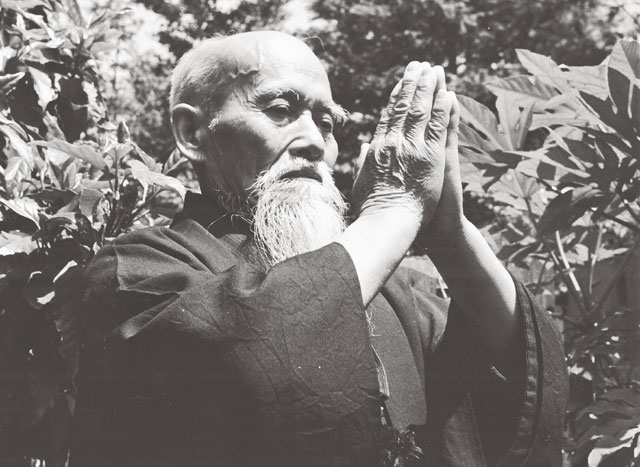
Ueshiba praying and giving reverence to nature and the divine.

I’d gravitate a bit towards Buddhism, mostly through my training in Aikido, a martial art. The founder of Aikido, Morihei Ueshiba, consciously developed Aikido as a physical embodiment of his spiritual views and principles. He specifically adhered to Shintoism, an ancient Japanese religion. By the time Ueshiba began practicing it, though, it was heavily influenced by Buddhism. There are definite similarities.

Like Shintoism, there are many deities and prayer rituals in Buddhism. My interests, though, are in cultivating certain principles and “states of being” valued in Buddhist philosophy such as empathy, peace and harmony with others and the environment, and being in touch with the present/one’s surroundings. I’ve found developing these very useful in helping me deal with immense stress and anxiety.

Indeed, I believe both my Aikido training and study of Buddhism helped me become more aware of my internal emotional processes. This allowed me to better mitigate my pain and fear, my depression essentially, through the years, especially during the time period when my mom was homeless.

This isn’t to say I didn’t ever pray or show reverence to Christian tenets and practices. I prayed with and for my mom. I even visited a Catholic priest with my aunt years ago to get insight as to what was happening to my mom. He assured us that it wasn’t demonic possession (I already figured as much.).

This continued when my mom moved in with me in February ’16. When I prayed, though I may have said the word “God,” I didn’t really pray to the Western, biblical one. To the extent I was praying to something at all, it was to the universe or to my ancestors. I prayed at times to my grandma, my mom’s mom, to help us in some way, too. I essentially prayed to anything that could and would help. It didn’t seem like anything was listening, though, at least at the time.

Now that my mom is gone, I’m trying to remain as open as possible to the spiritual possibilities and facets of life. Admittedly, I contemplate from time to time that there may very well not be anything greater than the physical world and, maybe someday, I’ll draw that conclusion. But right now, for me to accept that entirely would lead to the most cynical and depressing states of mind.

Fortunately, my perception has, also, changed already,  in a way that allows me to see things anew. I truly believe my mind and senses are the clearest they have been in years. This has made some of the journey a bit more painful, as the depths of my mom’s suffering are easier to see and feel. But it has also helped me see and appreciate certain events as something greater than mere coincidences. In other words, as assurances from the universe, and even maybe my mom, that things are going to be OK and that I do have help. I wasn’t able to see this before.

To share just one example: After some mulling, I decided to buy the cemetery plot next to my mom. While we buried her in the same cemetery as her parents, she’s immediately surrounded by strangers. I didn’t feel comfortable with that, ultimately.

I didn’t realize it right away, but the account number I was assigned for my plot is “5150.” I couldn’t believe it when I noticed it on the paperwork, while sitting at my office desk at home that day. It’s not an exaggeration to say that that sequence of numbers fully characterizes the nature of our relationship for the last 10 years. 5150 is the California legal code for involuntary hospitalizations and something I would try to have done to my mom multiple times, in the hope she would be stabilized.

If my mom was trying to send me a message, that would be a way she’d do it. She had a sharp sense of humor and was definitely blunt when she needed to be. When I saw the numbers, I just smiled, shook my head and said, “OK mom. Good one.” I didn’t feel like she’d be mad at me, though she’d despise me trying to hospitalize her, while she was alive.

After all, she used to like to tell me that someday the “truth will set me free.” She’d say it in reference to her delusions and hallucinations. They took a very religious form. When I’d get frustrated, I’d sometimes throw it back at her. “The truth will set you free, mom.” I can only hope that she would know and accept the truth now.

To touch on some science, I know the mind can see what it wants to see. But events like this one seem too improbable to accept as just coincidences. And I know one thing is absolutely certain. That things like this, patterns or connections between events and my family’s history, didn’t happen before my mom passed. If they did, my mind and heart weren’t open to them. The suffering and depression were too great. An event like that above, I’d just as likely interpret as more “bad luck.”

That was confirmed as much by a Buddhist counselor that spoke on trauma at a recent meditation workshop. He said that people need adequate breathing space and refuge, in order to cultivate their minds, bodies and spirits. He’d go on to say that people who are in life and death circumstances, especially those who have developed trauma, have a much harder time cultivating the calmness and clarity (i.e. being present) necessary to make and feel connection with people and the world/universe around them.

IMG_0072
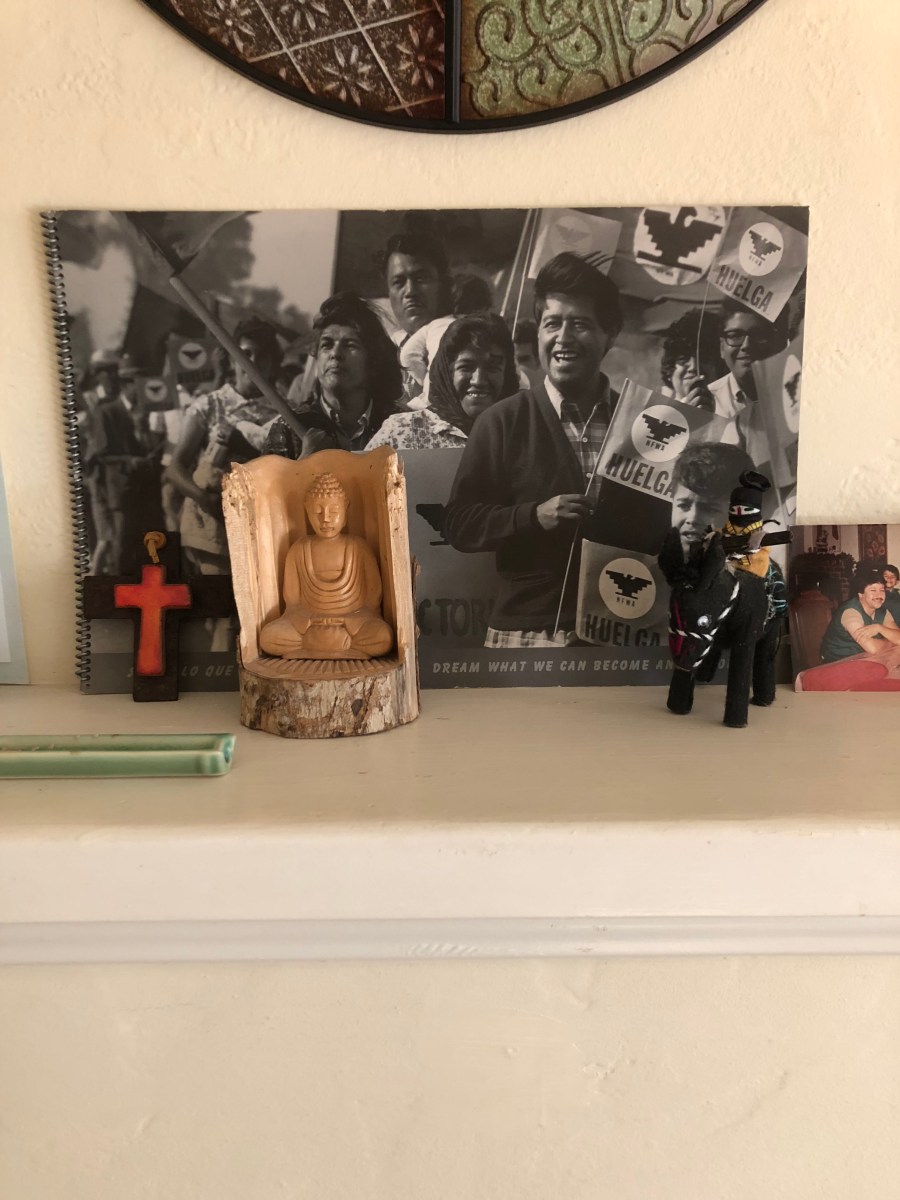
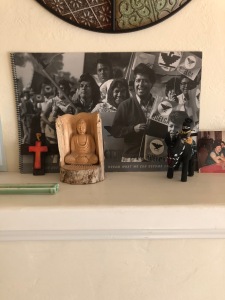
The center piece to my family altar. My family’s ethnic and racial heritage and history are themes.

Heck, when I think about things in hindsight sometimes, I now see that, as hard as things were, things worked out OK for us in many ways.  There’s also the “coincidence” that my mom nearly passed away exactly two years after she moved in with me. It was like the universe or God was saying, “I’m or we are watching and with you.” That was confirmed recently by the pastor of a local church my mom and I attended. In assuring me that my mama was looked after, even through her sickness, Pastor Lyn said, “Jesus is behind us, beside us and in front of us through our trials.”

Whatever the “truth” is, I’m grateful I’m finding some solace in things I’ve experienced and seeing things anew. Little rituals, like honoring a family altar I put up in my living room, help too. I don’t know where this path I’m on will end. But I do know that as long as I let my love for my family and principles, like justice for the poor and misfortunate, guide me, things should workout. I got through the worse of it, after all, OK.  I’m pretty sure both Jesus and Buddha would agree.