Most people’s minds, including my own, are on the elections. I’ve been thinking a bit about what the results mean for the future of mental healthcare reform. I’m reminded every day of the inhumane consequences created by my mom not having access to adequate psychiatric treatment. How could I not think about it?
Today, it was at a visit with the neurologist. My mom started crying during a memory test, because she couldn’t answer some of the questions. She doesn’t understand the nature or full extent of her health problems, but she knows she is being unjustly deprived of a better quality of life. So, despite whatever happens politically in our country, I’m in it for the long run. No person, no family, deserves to be so ignored, neglected and abused.
Slowly but surely, I’ve been gaining more attention to my blog and family’s story. Part of this has been done by contacting other bloggers, advocates and advocacy organizations. While I’ve gained support and interest through Facebook and Twitter, I’ve definitely garnered most of my attention through promotion at other blogs and, more recently, joining an actual campaign.
I was fortunate enough to have one of my blog posts promoted by well-known mental health advocate and writer Pete Earley. Pete has written a number of books, including two on mental illness. His book, Crazy: A Father’s Search Through America’s Mental Health Madness, is based on his own experience with trying to get psychiatric treatment for his son. I had actually read the book some years ago when I first started trying to get help for my mom. It truly is a fascinating read and remains one of the most valuable resources I’ve come across in learning what my family and I are up against. Pete was also very warm through our communication. He even sent me an autographed copy of his book Crazy. I’d encourage anyone interested in mental health reform to read the book and subscribe to his blog: http://www.peteearley.com/blog/
I also had a blog post promoted by the Treatment Advocacy Center, an organization that specifically focuses on the lack of treatment and programs for those with serious mental illness. More recently, they asked me if I’d participate in a campaign to raise awareness for the need for more psychiatric hospital beds. It wasn’t too difficult a decision for me. I had some concerns about what kind(s) of actual policies, if any, this may lead to them pushing for. I wouldn’t want my family’s story to be used for something I wouldn’t agree with. I figured I could always decide to stop participating, though, down the road if need be. The campaign #ABedInstead was launched last month and I’m happy to be a part of it: http://www.treatmentadvocacycenter.org/what-you-can-do/a-bed-instead
I was quite surprised, actually, by the amount of support and interest my family’s story generated, on Facebook in particular. It received more than 1000 “reactions”, 167 shares and almost 100 comments. The comments provided me with helpful feedback. Overwhelmingly, the comments were religious in content and highly supportive. My mom’s illness takes very religious and cultural forms. Indeed, she has always been a devout Christian. This response definitely makes me think I should touch on more of the religious aspect of her life, and religion and mental illness as a subject matter. It’d be challenging, but it’s worth the try.
Other things I may do is start a YouTube channel where I talk about being an advocate and caregiver for my mother. I might even try writing a book or two. Those articles I’ve been meaning to write on racial/ethnic and class disparity in mental healthcare definitely need to get done first, though.
The “most important election of our lifetimes” chorus is at a fever pitch this year, given the top presidential candidates’ very different styles and rhetoric. Is it as important for everyone, however? If recent history is any guide, too many people with serious mental illness (SMI) and their families will continue to grossly and unjustly suffer, regardless of who wins.
1 in 5 Americans live with a mental health issue such as anxiety or obsessive compulsive disorder. Less known, however, is that 4% of the population, 1 in 25 Americans, suffer from a SMI such as bipolar disorder, major depression, or schizophrenia. Of this subgroup, about 40% go untreated. They end up being disproportionately included among the incarcerated or homeless. In fact, about one-third of the homeless suffer from an untreated SMI. Too many others are prematurely lost to suicide.
Part of what makes people with SMI difficult to treat is the nature of their illness. For more than fifteen years now, my mother has been living with a SMI. She suffers from severe persecutory delusions, paranoia, and hallucinations. She believes cameras in the walls and neighbors watch and monitor her, and, at times, that her food, water and the air are poisoned. Daily, she claims that evil spirits are attacking her, causing her both physical and emotional pain.
My family and I have tried desperately to get her help, but nothing has succeeded, not family interventions or meetings with religious clergy, not meetings with counselors or psychiatrists. To her own detriment, she does not believe she is ill. Researchers call this lack of insight “anosognosia.” Approximately, 50% of the people with SMI suffer from it.
And, as the statistics suggest, my mother has experienced extreme hardship. She has gone from being employed, married, and middle-class to being unemployed, divorced, and impoverished. Recently, she experienced a two-year stint of homelessness, living mainly in her car in California’s Central Valley, at which time, both her physical and psychological health greatly deteriorated. Physically, she suffers from diabetes, congestive heart failure and, most recently, kidney failure. She has not always heard voices, but her psychosis has deepened to the point that she now hears voices around 80% of the time.
The government and mental health care system share blame for our plight. Through lack of responsiveness and by design, they have made it exceedingly difficult to get help for my mom. At various times, my sister and I have contacted and met with different county departments and agencies. More than once, for example, we had to badger Adult Protective Services (APS) and the Public Guardian Office (PGO) just to check in on my mom. Ultimately, APS passed the buck to the PGO.
The PGO, in turn, concluded that my mom was competent enough to take care of herself. In the same breath, however, the PGO manager told me that my mom needed to be involuntarily psychiatrically hospitalized and treated! PGOs can and do take responsibility for the care and housing of people with mental illness. This was the manager’s way of telling me they did not want responsibility for someone who was not stable and adherent to psychiatric treatment. Like the APS, the PGO was washing its hands.
Sure enough, my mom has been involuntarily hospitalized, what in California legal terminology is called a “51/50 hold.” Altogether, she has been 51/50ed six times for putting herself in danger, two times in San Francisco (more liberal), two times in Fresno, and two times in Bakersfield (both more conservative). Each time, however, my mom was released in under 24 hours without even being psychiatrically treated, ostensibly for no longer meeting the “legal threshold” of endangerment, but also unquestionably because of a lack of psychiatric hospital beds.
The stats bear this out. Not unlike other areas of health care, for decades, deep cuts have been the trend. According to the Treatment Advocacy Center, nationally, we now have 11.7 psychiatric beds per 100,000 people, as compared with 337 beds per 100,000 people in 1955. In California, according to the California Hospital Association, the number of psychiatric beds available statewide decreased by 2,700 — or nearly 30% — from 1995 to 2013, while the state’s population grew 20%!
Why? Part of it is because mental health funds are being improperly diverted. In California, the money legislatively intended for people with SMI is going into programs and services that are not accessible to or effective for people with SMI. In fact, recently, the State Auditor found that mental health money and outcomes are not being adequately monitored.
There is also a bipartisan consensus on continuing to close psychiatric hospitals and under-resource those that remain open to reduce public spending, in the name of “fiscal responsibility.” Ronald Reagan may have initiated the closing of psychiatric hospitals, but plenty of Democrats, including President Obama and California Governor Jerry Brown, are continuing what he started.
To her credit, Hilary Clinton recently released a promising mental health plan. It calls for decriminalizing mental illness and supportive housing, among other things. There is virtually no mention, however, of the lack of quality psychiatric hospitals or treatment programs that could help people with SMI— As if it is not even up for discussion. There is, also, no mention of support for a congressional bill (H.R.2646), which attempts to partially address these problems. Donald Trump has not made mental health care reform a priority at all, but Clinton as of yet has not shown a true appreciation of the scale of the problem.
Sure, it is easy enough to say that Clinton’s plan provides at least a basis for improving our mental health care system. As a political scientist, I understand politics is the art of compromise. I also know, though, that health care insurance companies hold too much sway and politicians, of both parties, are more responsive to Big Business and the affluent, rather than the indigent, old, and disabled, their rhetoric and policy statements aside. I have, after all, contacted various political representatives to try and get help. Some inquiries have been made reluctantly on my behalf when dealing with slow and/or incompetent agencies/departments, but not any one of them has ever asked me what kind of policies or programs could help my mother.
Instead of waiting for enough help from the system, I took a leave from my job to try to take care of my mom. I moved her in with me this past February. At the time, she was living in a hotel. Her health is frail and I worry she does not have much more time to live. She, and others like her, deserve access to quality hospitals with well-trained, and culturally responsive doctors and staff. We look forward to the election results, like most of the country. But regardless of the outcome, we will continue to live day to day just trying to survive in a society that is, in many ways, “mad” and needs healing and treatment, too.
My dad came to visit my mom and I for a couple of days this past week and I used some of the time for respite from care-taking duties. I went to go see Suicide Squad, a movie based on the DC comic book franchise. The squad is basically a team of super criminals. One of the super criminals is the character Harley Quinn, who in the movie is the girlfriend of a homicidal maniac, the Joker, the character of Batman comic book fame. Like the Joker, Quinn is also an immensely violent, psychotic killer. Her weapons of choice include a colorful, personalized baseball bat which she uses to bludgeon people to death.
Margot Robbie as Harley Quinn in the movie Suicide Squad.
As the movie demonstrates, there is little question that Hollywood, as with much of our pop culture, demonizes people with serious mental illness (SMI), particularly people with schizophrenia. In the movie, Quinn openly admits to hearing voices and experiencing other hallucinations. She exhibits some endearing qualities, like loyalty to her friends, but fully embraces and relishes in her homicidal and criminal urges.
As any mental health advocate would quickly point out, however, these portrayals are highly unfair and misleading. That fact is that most people with serious mental illness are much more likely to be victims of violence, vulnerable as they are to homelessness and compromised physical and psychological health. Theft and assault are the most common crimes committed against people with schizophrenia. For women with schizophrenia, rape is a constant danger (1). This demonizing of people with serious mental illness undeniably contributes to the gross discrimination and victimization people with SMI experience in their daily lives, whether by other people or at the hands of the government.
To help combat this prejudice and stigma, mental health advocacy organizations, like the National Alliance on Mental Illness (NAMI), spend millions of dollars on educational programs and public relations campaigns. Indeed, I personally benefited from attending a NAMI family-to-family educational program when I first started trying to get help for my mom years ago. Learning about the different types and symptoms of mental illness and hearing the stories of other family members helped me develop immense insight and compassion for people with SMI and their families, including my own.
Not only does my mom have a SMI, but she has multiple brothers and sisters that lived or are living with SMI too. One of my few memories, as a child, of my schizophrenic aunt is of her having a violent outburst during a family gathering. She attacked my uncle and left a large, bloody scratch near his eye. My sister and I, terrified, huddled in the corner behind the living room couch, while the adults tried to restrain her until the police arrived.
Another time my aunt, without warning, hit her mom, my grandma, over the nose with a glass ashtray. Needless to say, I grew up afraid of my poor afflicted aunt. And for quite some time, I was also in denial of what kind of SMI my mom had. Initially, when trying to help my mom receive treatment and care, I thought she was perhaps bipolar. “She can’t be schizophrenic,” I’d say to myself. “Schizophrenics are horribly deranged.” Slowly but surely, and through the course of dealing with much personal grief, I’ve come to accept that symptoms of schizophrenia were expressing themselves in my mom too. Hearing her talk to herself for the first time was absolutely heartbreaking. She mimicked the demon I came to think of my aunt as in my youth. She was the demented monster or “Psycho” in so much Hollywood movie lore. (My mom has been diagnosed with schizoaffective disorder.)
Fortunately for my family, my mom has never expressed the level of violence my aunt did. She yells and curses often times, but mainly to the voices tormenting her. She gets angry at me, of course, but manages to not swear at me or try and physically hurt me, to my surprise and relief. That’s not to say she hasn’t ever physically assaulted me, or sworn at me though, because she has.
Years ago when living with me in San Francisco, my mom punched me in the stomach one day when I stepped in front of her to prevent her from walking away from our apartment. A police officer was on the way to take her to General Hospital for a 51/50 hold. She was in an acute episode that morning and angry and hostile, claiming the people who were dropping off their children for school across the street were spying on her. As she turned around to go back into the apartment, she coldly said to me, “I’m going to fuck you up when I return [from the hospital].”
Fortunately, for us both, my mom is significantly less hostile and belligerent towards me than she used to be, even though her psychosis is more of a constant. Sometimes I wonder, though, if I should be more guarded. Maybe I should lock my bedroom door at night when she’s in an acute episode, like I sometimes used to. As a trained social scientist, I like to rely on evidence and research to inform my opinions. But the research on the connection between SMI and violence is woefully inadequate. Indeed, not much on it exists at all.
In a recent blog on the subject, well-known mental health advocate and journalist Pete Earley says, “Because of stigma, we always begin every conversation about violence by explaining that individuals with mental illnesses are no more violent than the general public and, in fact, are more likely to become victims than perpetrators” (2.) He’s talking about MH advocates and reformers, but the same can perhaps be said for researchers and/or academics. After all, they can be closely aligned with or dependent on advocacy organizations, like NAMI, that are reluctant to talk about violence committed by the mentally ill. Instead, they prefer to focus on positivity and recovery.
The fact of the matter is, however, that many people with SMI languish without successful treatment for years, if not for their whole lives. For many that suffer from persecutory paranoia and delusions (i.e. the belief that people or some kind of entities are out to get them), it’s likely they will violently lash out during a time of acute psychosis through physical force. (In their minds, they are defending themselves.) When my mom punched me in my stomach and verbally threatened me, I know it was because she believed an evil spirit was controlling me or possessing me. My mom’s illness takes a very cultural and religious based form.
With respect to the sparse literature, much of it fails to illuminate the subject matter. One study published in an academic psychology journal in 2014 shows a relatively weak connection between violence and people with SMI. One thing of particular interest is the following, though; of the 429 crimes committed by 143 offenders with three major types of mental illness, researchers found that 3 percent of their crimes were directly related to symptoms of major depression, 4 percent to symptoms of schizophrenia disorders and 10 percent to symptoms of bipolar disorder. To me, this is interesting because it challenges my preconception that schizophrenics are among the most likely to commit crimes and/or violent acts. As the authors admit, though, there are some problems with the study’s methodology that need to be improved (3).
Just this past month, however, a recent study was published by the Treatment Advocacy Center that specifically focuses on family homicides committed by people with SMI. The study is persuasive and innovative, in that it uses national data provided by the Federal Bureau of Investigation (FBI), Center for Disease Control (CDC) and numerous media reports. In essence, it extrapolates media reports on family homicides committed by people to SMI onto national homicide data. It’s arguable that the data underreports the connection or numbers, since, for one, many homicides committed by people with SMI probably go unreported by the press. Nonetheless, the data shows that people with SMI do commit murders at higher rates than the general population.
According to the report, there were approximately 4000 family homicides committed in 2013. The number of family homicides associated with SMI was 1150. This was 29% of all family homicides and 7% of all homicides in 2013. People with SMI make up approximately 4% of the US population any given year. Thus, they obviously accounted for a disproportionate percentage of family homicides and total homicides nationwide. Other things of note in the study are the specific family relationships and comparison to changes in the national homicide figures (4).
The majority of homicides involving parents and their children were committed by people with SMI. In addition, around 67% of parents killed by children were killed by children with SMI. Around 50% of the children killed by parents were killed by parents with SMI. And although homicide rates in the US have decreased in recent years, there has been virtually no decrease in the number of children with SMI killing parents or parents with SMI killing children (4).
As in the high profile cases that have rocked national attention recently, most of the people with SMI who commit murders are receiving inadequate or no psychiatric treatment. And in many instances, violent acts committed by people with SMI are preceded with warning signs such as obvious psychotic symptoms (e.g. severe hallucinations) and verbal threats. Key indicators also include abuse of drugs and/or alcohol and past acts of violence. While it can be difficult to distinguish which factor is more influential (Is it the abuse of drugs or not taking psychiatric medication that plays a bigger role?), not taking effective medication no doubt increases the chance for violence, regardless of an individual’s personality traits and/or circumstances.
We undoubtedly need more and better studies on the connection between violence and SMI, in order to better inform our policy and political decisions and change the way we as a society think about mental illness. Ignorance and fear leads to stigma, and the reality is that people with SMI and their families need more compassion and access to MH treatment and services than what is currently being provided. Violence, after all, takes various forms. Leaving people alone to suffer from their hallucinations and delusions is a form of violence. Leaving family members alone to deal with and try to help them is also violence, a psychological torture really. As long as this situation is allowed to continue, then nobody’s hands are truly clean.
Footnotes:
Torrey, E. Fuller, Surviving Schizophrenia (New York: Collins, 2006), 287-289.
It has been a couple of months since my mom was denied mental health services by the county (See my last post.). I of course made phone calls and sent emails to various people and complained. An email to my Board of Supervisor got me in contact with the Director of Behavioral Health.
After communicating back and forth with the Director for a few weeks about different options, including trying to enroll my mom again into an “intensive MH program,” the Director suggested that I contact another department, the Department of Aging and Veterans Services (AVS). She said my mom could try utilizing their peer support program. A bit flabbergasted, I thought, “Are you kidding me?” Was the peer counselor supposed to help my mom “break the stigma” of mental illness and convince her to see a psychiatrist? I played along, though, figuring that by going this route, we can at least say that we did that and it did not work, in the event the county tries to deter us from MH services again.
I ended up talking to Jill, a supervisor, at AVS. Jill was empathetic and responsive when I explained to her my mother’s history and the current situation. She stated explicitly, however, that she was not sure what her program could do for my mom. She said that they do not focus on mental health and, to the degree that they deal with people with mental health problems at all, they are people with low level anxiety and/or depression. At this point, I just felt like Madelyn was giving me the run around intentionally. She was set to retire sometime in August and I figured this was her way to avoid dealing with me until then.
Regardless, Jill genuinely expressed a desire to help. We made plans for a clinician to visit my mom in our home the following week. It was not entirely clear what the clinician would be exactly doing, but regardless, I figured I could request that they help me/us access MH services at some point in the process.
As with any appointment regarding my mom’s health, I was somewhat worried how it would go. I waited till the day before to tell my mom about the planned visit with the clinician. The less time she has dwelling about things, the better. And even though she said she was fine with it, I knew anything could happen the actual day of. She had recently walked out of two appointments, one being with a Gastroenterologist and another for a MRI.
Vinnie, the clinician, appeared to be in her early thirties. I could not help but wonder how long Vinnie had been working with the county and what kind of formal training and/or education she had. I was hoping she would be skilled enough to work with my mom.
She impressed me relatively quickly. She was very warm, assuring and friendly. Within fifteen minutes of talking with my mom, my mom opened up to her about some of the hardship she has endured in her recent past. Car accidents, falls, being estranged from her family, medical abuse–She mentioned various things she did experience, like the car accidents, but also things she did not experience, like a nurse dressed in black trying to poison her at a hospital. Vinnie listened to her attentively, regardless of any personal doubts she may have had about the accuracy of my mom’s accounts. This naturally helped build trust between Vinnie and my mom.
Towards the end of what was a short, initial visit, Vinnie explained to us that the specific program she was a part of was called “Project Hope.” As part of the program, she would make eight visits, one per week, to spend time socializing with my mom and in order to help my mom create personal goals and a plan for achieving them. “OK fine,” I thought. I could use some help with my mom in those areas. My mom was disinterested in many social outings I have suggested and just the company with another person would be good.
During Vinnie’s second visit, she would mention what I was hoping would come out of the process. She said that she thought it would be a good idea for my mom to return to “Senior Access” for an evaluation. Without mentioning the mental health component explicitly, she said they could offer a team of support people to help my mom deal with her medical and emotional needs. That is how I have explained it to my mom all along. I have avoided the word “psychiatrist” and think it should be avoided as much as possible. My mom did not refuse or resist the idea, to my relief.
So for now, this is where we stand. My mom is enjoying Vinnie’s visits. My mom considers her a friend and looks forward to their time together. During Vinnie’s third visit this past week they swapped cooking recipes and Vinnie talked with my mom about utilizing some Senior community resources. Our appointment, our second attempt, to gain access to MH services is in a couple of weeks.
My mom has been living with me six months now and we are really no step closer to having her psychiatric illness treated. I am of course hoping for the best, but know by now not to expect quick, effective results, if any results at all. Ideally, she needs daily monitoring, counseling and treatment, the kind only available in a hospital and/or treatment facility setting. The alternative is to do nothing, however, but accept the injustice and cruelty the system afflicts on the both of us. I refuse to live like that, though. I learned that from my mother.
For three months, I had been waiting to enroll my mom into a county mental health program. I wanted to do it much sooner, but we had to wait for my mom’s Medi-Cal to officially transfer from another county. Dealing with slow government bureaucracy has been a constant frustration.
The program is coordinated, intensive outpatient treatment, typically referred to as a Full Service Partnership (FSP) in California. I didn’t have a lot of faith in the program, since outpatient treatment has never proven successful for my mom in the past. At most, I was hoping we’d get lucky with a decent treatment team and I could get some help in coordinating and monitoring her various physical/medical needs.
As it turned out, we wouldn’t even get our feet in the door. My mom would be outright rejected at the assessment. After about forty minutes of questions pertaining to personal and family medical history, the clinician suddenly asked my mom if she had a mental illness AND whether or not she wanted to access county MH services. Flabbergasted, I thought “What the hell?! Surely this MH worker knows that there are people with mental illness that don’t believe they’re ill!”
Predictably, my mom became agitated and, as she is prone to do, started talking openly about how her spiritual visitations are real. After a few minutes listening to my mom and trying to calm her down, I asked the clinician as to why she would ask my mom those questions. She responded by referring to the notion of “informed consent” (i.e. voluntarily agreeing) and how that requires her to be completely truthful to my mom about what they do. She then went on to explicitly say that she cannot enroll my mom into the program, unless my mom answers in the affirmative to those questions.
I was furious, but in as calm a manner as I could, I expressed my immense disappointment with her approach. Among other things, I told her if that was county policy, it was misguided and that there are more tactful, sensitive ways to try and help people like my mom. I walked out a minute after, as she continued to ask my mom questions and fill out forms.
Just more damning proof of how the MH system is setup to deny the most seriously mentally ill help, I thought. It hasn’t always been this way.
In 1963, President Kennedy asked Congress to spend $3 billion to replace state hospitals with a network of community mental health centers. The development of more effective anti-psychotic drugs seemingly made it possible for patients to return to their communities.
However, for nearly twenty years, no change occurred, due to political circumstances and events such as President Kennedy’s assassination. In the 1980s, though, numerous lawsuits against patient abuse in state hospitals became common. In response, courts passed a flurry of patients’ rights laws. Compared to before, it became exceedingly difficult to involuntarily hospitalize somebody. This negative publicity was all increasingly cash strapped state governments needed. They began to close state hospitals and discharge patients.
Patients’ rights advocates declared victory for what was being called “deinstitutionalization.” Fast forward some near thirty years later, though, and the money for community centers that were supposed to replace state hospitals has never materialized. Consequently, instead of adequate treatment, too many people who suffer from mental illness end up homeless, incarcerated or prematurely dead. This largely occurs due to the difficulty of being able to involuntarily hospitalize someone; but also because the psychiatric hospitals that remain are inadequately staffed and funded.
Despite the high economic and social costs this generates, the MH system is vehemently defended by various interests and groups, from directors in government on down to health care and social work professionals, to patients’ rights groups and many consumers themselves. Their political zeal in defending the status quo is matched by their ideological commitment to civil libertarianism, a view that prioritizes maximum freedom for the individual. In the MH system, this means that inadequate or no treatment at all for people with a serious mental illness is justified in terms of “freedom of choice” and “personal agency.”
I was reminded of this when my mom was hospitalized last December for congestive heart failure complications. I met with the hospital social worker to get more information on assistance in finding a residential care facility for my mom, in case we needed it. As those conversations tend to go, I brought up my frustration with inadequate care and treatment from the MH system. While expressing genuine sympathy to my family’s plight, the social worker didn’t mince words when she said that my mother had a right to refuse treatment. She went so far as to ask me what my mother wanted to do. I said what I usually say when I hear this: “She doesn’t want to take psychiatric medicine, but she wants to be with her family. We can’t live with her, unless she is stabilized, though.”
The ridiculous irony in what happened at the assessment makes the indictment of the MH system all the more clear. Setup, ostensibly, to respect and protect the rights and freedom of people, my mom was denied county MH services, which both her and I pay taxes for, because she is too sick to acknowledge she has a serious psychiatric illness. Her Right to health services was denied because she isn’t able to understand and reason sufficiently enough. This is the same system that in the past has deemed my mother in court to be mentally incompetent and in need of a conservatorship, due to her mental illness (Yes, I’ve been her conservator. That was a failure and a waste of thousands of dollars for me.). My mother’s health hasn’t improved since then. It has gotten remarkably worse!
Apparently, however, the clinician didn’t handle the assessment “appropriately.” Both the office manager and Director of Behavioral Health, whom I contacted out of my indignation, affirmed to me that a person does not in fact have to admit or accept they have a mental illness to access county MH services. While they assured me that they would help us if we decided to return to access services, I’m now wondering what their quality of services are like. Are other county MH workers as poorly trained or as bad at their jobs?
I also don’t buy that it was just a lack of judgment, frankly. The extreme commitment to civil libertarianism permeates every corner of the MH field. As the office manager admitted, the clinician was trained in an actual MH program at a school. In other words, she was taught and trained by people committed to this philosophy and in strategies and treatments that are by and large woefully inadequate for the most seriously ill. If poor judgment played a part, ideological purism helped cloud it.
I’ll eventually try and persuade my mother to try and enroll again. I have no delusions, however, that she needs and deserves quality treatment in a psychiatric hospital or facility with compassionate, responsive staff and doctors committed to making her as whole as possible again.
(This is a political article I wrote days before the CA primary. There was so much I could get into just about CA government and society. I focused on some laws/policies that had national relevance, though.)
The presidential primaries have put a spotlight on healthcare, mass incarceration and increasing poverty in the U.S. A related issue isn’t receiving adequate attention, however. That being insufficient access to mental healthcare treatment for people who have a serious mental illness (SMI).
According to NAMI, 1 in 4 adults– approximately, 58 million Americans– lives with a mental health disorder in any given year. 1 in 17 lives with a SMI such as schizophrenia or bipolar disorder I. If not treated effectively, SMI is oftentimes severely debilitating. It can lead to joblessness, homelessness, poverty, incarceration and even the premature loss of life.
This reality has been exacerbated the last few decades as state hospitals and treatment centers have closed and healthcare costs have skyrocketed. For example, in 1955, there was 1 psychiatric bed for every 300 Americans. In 2010, there was 1 psychiatric bed for every 7,100 Americas. According to a recent report released by the Treatment Advocacy Center (TAC), only 3.5% of the state hospital beds that existed in 1955 were still in operation by the first quarter of 2016.
In California, the situation is particularly stark. According to a 2012 TAC report, the state eliminated 16 percent of its beds between 2005 and 2010, leaving just 14.2 public psychiatric beds per 100,000 people – far below the 50-bed standard considered necessary to provide minimally adequate mental health treatment. In 25 counties in the state, there were no psychiatric beds at all.
For too many people with SMI, jails and prisons become their homes and treatment centers. In 2007, 19 percent of CA state prisoners were mentally ill. By 2012, 25 percent were. Given that people with SMI often suffer from severe delusions and hallucinations, conditions in jails and prisons, which can include periods of solitary confinement and/or abuse from guards, can end up making an inmate’s psychosis worse, thus reducing the chance for successful recovery.
This abysmal situation in CA persists, despite increased national attention on people with SMI. With presidential campaigning in CA underway, it’s worth looking at what, if anything, the candidates propose to do for SMI treatment and care.
Like healthcare in general, for people with SMI, access to mental healthcare largely depends on coverage, funding and parity laws that prevent discrimination. On these issues, it’s pretty clear that both Democratic candidates, Bernie Sanders and Hillary Clinton, take better positions than the Republican frontrunner, Donald Trump.
Both Clinton and Sanders want to expand healthcare coverage to more Americans. This would undoubtedly benefit people with SMI, since many are poor and unemployed and suffer from concurrent medical/physical ailments that require attention, treatment and monitoring. Both also have expressed support for helping people with substance abuse problems when talking about people with mental illness.
In comparison, Trump is vague when speaking about his healthcare policies, but his website lists ideas that are consistent with economic conservatism. Trump wants to eliminate Obamacare and incentivize competition between insurance and pharmaceutical companies. On mental health specifically, his website just states the need for eliminating privacy laws that prevent family members from receiving information about their sick loved one’s condition and care. While a worthwhile idea, overall, his views, if implemented, would leave too many people with SMI remaining uninsured and vulnerable to the ongoing predations of profit driven corporations.
Regarding parity laws, both Sanders and Clinton support President Obama’s landmark law banning discrimination in treatment against people with mental illness. Seven years after the law was passed, however, recent research shows that insurance companies are still finding ways to deny or stall treatment. Lax enforcement of the law is partly to blame and both candidates, presumably, would support increased and robust enforcement. They have failed, however, to emphasize this or call on President Obama to do so. If prodded, Sanders would probably point to this behavior by insurance companies as more reason to institute single-payer healthcare, as part of his call for a “revolution in mental health.”
Most relevant of all to the gross shortage of psychiatric hospitals and treatment centers is the Institutes for Mental Disease (IMD) exclusion. Instituted in 1965, the IMD places severe limits on Medicaid expenditures that would go towards psychiatric facilities and substance abuse centers. Consequently, this has contributed to facility closures and increased the incentive for states to send psychotic patients and/or patients with addiction problems to regular hospitals, in order to be at least partially reimbursed by Medicaid. This does little to nothing to address one’s psychiatric illness and leaves patients at the mercy of an already under-resourced hospital and overworked hospital staff.
Repealing the IMD would definitely be welcomed by many states and family members of people with SMI. In the least, presidential candidates who claim to have the best interest of the mentally ill and disadvantaged in mind should be mentioning the nature and extent of the problem. After all, to do nothing or continue to do too little has proven to be economically wasteful, politically wrongheaded and societally inhumane. Who will be the first candidate to take up the call?
Living with my mom this past month has me, again, thinking about the legal barriers involved in involuntary hospitalizations, the legal/medical notion of “gravely disabled” and even the corruption and complacency in the mental health system.
I say “again” because, for the last 6 to 7 years, my mom’s unwillingness and inability to seek treatment for her serious mental illness have, on numerous occasions, forced me and my sister to try and get her involuntarily hospitalized, or what’s known legally in California as a “51/50 hold.” As my family has learned, however, getting my mom 51/50ed AND treated (i.e. stabilized) is virtually impossible. For one, the legal requirement is ridiculously strict and various “checks and balances”, or roadblocks, are embedded throughout the entire process that limit the chances for successful treatment.
Legally speaking, a person must meet one of three criterion to be 51/50ed. A person must be suicidal, a serious threat to someone else or “gravely disabled.” If an authority figure, like a police officer or field clinician, deems a person meets one of these criteria, then the person is sent to an inpatient facility, often a county public hospital. Once there, the person is assessed by a psychiatrist. If deemed necessary, treatment with medication is attempted. If the person is non-compliant, as is usually the case with someone who has a serious mental illness (Why take the medicine if you don’t believe you’re really sick?), the person may be held for an extended period of time in order to treat him or her, with coercion if necessary.
At different stages, a judge decides how long and whether or not the person can be held or continue to be held against their will. So essentially, it’s possible for a judge to overrule BOTH the tending psychiatrist and the law enforcement officer or field clinician that had the person initially 51/50ed.
In my mom’s case, she has been 51/50ed at least four times in the last 6-7 years. Two of those times, she was found confused and incoherent on the side of a road in her car by police officers. At the time, she’d regularly drive off in her car in a psychotic episode, usually because she believed she was in grave danger. The two other times, she was failing to treat her diabetes adequately. Her glucose, consequently, rose above 400, which is considered life threatening. A field team that I called deemed her a threat to herself because she didn’t believe the readings, and was saying that she actually didn’t have diabetes at all.
Each time, however, and despite my pleas for them to treat her, she was released by the hospital in under 24 hours for no longer meeting the 51/50 criteria and without taking any psychiatric medication. It became obvious that hospital personnel were taking much of what my mom was saying during their questioning at face value. My mom can “hold it together” decently in short stints, when she has to, and she learned very quickly how to answer their questions.
More or less it goes like this: “Are you suicidal?” “No.”
“Are you hearing voices?” “No.”
“Will you begin treating your diabetes adequately?” “Yes.”
In a conversation I once had with the tending psychiatrist at San Francisco General Hospital, he explained to me that he wanted to keep and treat her, but based on the case he could build, he believed the judge would decide to release her. She’d be released in under 24hrs.
These 51/50s all happened within a three year time period, between 2007 and 2010. In this same period, my mom’s housing was becoming more precarious. She would regularly get into conflict with her neighbors and/or property managers over various things, like accusing her neighbors of spying on her and even breaking into her apartment.
Like clockwork, she would eventually be evicted, often times within months of finding a new place. Starting in 2010, my mom became effectively homeless, living in a car. I thought with certainty that her being homeless would strengthen the case for involuntary treatment, on the basis of her meeting the “gravely disabled” criterion. In fact, I was told by the psychiatrist at SFGH that if she was homeless, he would have had a stronger case to argue in front of the judge. At that time, my mom was staying with her brother, so had a home to return to. Her being literally homeless, however, wouldn’t matter much. In fact, it didn’t matter at all.
The California state code sounds pretty straight forward. It states a person is considered gravely disabled when “The person’s mental condition prevents him/her from being able to provide food, clothing and/or shelter…” In another section, it reads “This does not necessarily mean homeless, as a homeless person who is able to seek housing (even in a temporary shelter) when weather demands it would not fall into this category.” Each of these sections would be grossly distorted by authorities countless times.
Serious mental illness among the homeless population is considerable.
My mom’s health and safety were in regular jeopardy when she was homeless. Her physical health suffered greatly, undermined as it was by the malnourishment, lack of rest and sleep and increased stress that accompanied her condition. She would at times show up at my home in San Francisco or my sister’s home in Fresno unannounced, weak, tired and distressed. We would let her stay to rest and often use the opportunity to call authorities to conduct a “welfare check” on my mom.
The police and ambulance would show up and, while my mom would be assessed by the medics, we would request that the police initiate a 51/50. While not in an obvious acute psychotic state, we’d explain to them her history of not treating her psychiatric condition, her prior 51/50s and current state of homelessness. Knowing the exact wording of the state code, we’d say explicitly that she was homeless and unable to care for herself adequately, due to her psychiatric illness. We’d try multiple times, hoping a different police officer would prove more helpful. However, as if reciting from the same department briefing, they all would say, almost verbatim, that to be considered “gravely disabled”, a person has to be lying down on the railroad tracks, in their own urine and defecation while naked!
Over time, it became clear to me in talking to various mental health personnel that this extreme interpretation of “gravely disabled” was actually the official view in the mental health field. Once, a field worker (a clinician) told me that as long as a homeless person is able to put a plan together, a plan consisting of where they are going to eat and sleep, that person wasn’t considered gravely disabled. Of course, my mom would lie and make it sound like she did have a plan. Her deteriorating state and past history of self-neglect weren’t factors whatsoever! The fact that she had an untreated serious mental illness was a non-factor! The fact that she was immensely suffering was a non-factor! Whether in the hospital or out, MH workers and law enforcement instead just took her at her word.
A rep with the California Department of Public Health would tell me when I challenged her interpretation of “gravely disabled” that “technically, a car is a roof over one’s head.”
I don’t doubt that the interpretation of “gravely disabled” has become more narrow and absurd as funding and resources, i.e. beds, for treatment centers have been increasingly cut. Yes, obviously there needs to be safeguards and civil rights protections. But as with my mom’s situation and countless others, the reality is this: People with serious mental illness are being unjustly neglected, unless they do something criminally and/or ghastly wrong. It should never have to reach that point.
I moved mom in with me in SF for a short time in 2009. It’d prove too hard with her refusal to seek and adhere to MH treatment.
At this point, having my mom assessed for a possible 51/50 isn’t even an option really. It has proven pointless and would just cause unnecessary stress for us both. I feel this way, despite seeing my mom on a daily basis continue to suffer from severe delusions and hallucinations. What she calls “spiritual attacks” are pretty constant and rare is the night that she is able to sleep soundly. She spends a good portion of the day and night rebuking and even swearing at the “evil voices” that torment her and that she blames for causing her pain in different parts of her body.
She even says that they try to make her trip and fall. This makes day to day tasks and business immensely difficult for her to accomplish. She’ll forget things that I say or ask her to do. She won’t remember to take her medicine regularly for various physical ailments, unless I remind her. And just about everything needs to be negotiated with her, from when to run errands to what we are going to have to eat, since she relies on the “good voices” to tell her what she should do. This is on top of her severe physical limitations that have developed, due to inadequate self-care, unstable housing and stress. My mom should be in a hospital or treatment center, until stabilized, so she has a better chance at piecing her life back together.
This week marks a month since my mom moved in with me. I knew it’d be challenging. In actuality, it has been damn near overwhelming. On top of being her caretaker seven days a week, I also play the role of counselor, social worker, case manager, advocate and her main peer and family support person. I’ve spent countless hours just being on the phone looking for doctors and dealing with our infamous, impersonal government bureaucracy in trying to get her Medi-Cal case transferred. After some initial problems with finding a clinic or doctor (Many are not accepting new patients, due to the increase in insured people from Obamacare.), I was finally able to find a doctor by searching the Internet. That was a crapshoot because there is no website that lists doctors that accept straight Medi-Cal. And even though a site may state the clinic or doctor accepts it, you don’t actually find out whether or not they accept it until you call.
Interpersonally, challenges abound also. I’ve been trying to bond and build trust with my mom. That has been made exceedingly difficult, though, due to her hallucinations and delusions. These affect her moods, comprehension ability, level of social engagement and just her ability to have a conversation with me. In my estimation, she hears voices around 80% of the time.
As is common with people who have a serious mental illness and hear voices, the voices can vary in the emotions and associations they arouse. Put simply, there are “good” voices and “bad” voices. For my mom, they take a religious form. There are “godly” voices and “evil” voices. The godly voices look out for her and protect her, she says. They can be biblical figures/prophets, while the evil voices can be evil spirits or witches. The evil voices torment my mom by telling her various things like they want to kill her, that she is getting ugly and old and even sexual things. Some days, my mother physically struggles with fatigue, weakness and/or nausea. On days like these, she says the evil spirits and witches are to blame. The voices tell her that they made her sick by spoiling her food or drink and entering her body.
When the evil voices are afflicting her, the godly voices do battle with them. They tell her what to say or do to cast the evil voices/spirits away or vanquish them. At more acute times, this can take a quite animated, even disconcerting form, with my mom talking loudly, sometimes swearing, while walking into different rooms and opening doors around the house. “Get out! Get out!” she will say. She calls this “spiritual warfare.” Some nights, this limits her sleeping to just four or five hours.
When she is agitated, I do my best to assure her and calm her down. I’ll pray with her or sage her room and the house. Though sometimes, I’ll just keep an eye on her and won’t engage with her verbally, because I’m busy or not in the mood to deal or I’m just trying to recharge with sleep. If she was more physically capable, I’d be concerned about her wandering outside and causing problems with neighbors, as she has done in the past. For now, that hasn’t been a problem, fortunately.
When hallucinating and when the evil voices aren’t present, she is listening to and conversing with the godly voices. From what I can tell, my mom enjoys engaging with them. It provides euphoria and self-worth. How could it not, speaking with an anointed voice sent by God? This is pretty typical, according to the literature on serious mental illness (SMI). People who hear voices often times willingly engage and interact with them. It can get to the point to where the person will ask or take the advice of the voices around mundane things, like what to buy or eat.
In Walmart recently, this led to a quarrel between my mom and I. They didn’t have her size in the pants she liked. The good voices, she said, told her that her size would be there the next day. Tired and exasperated, I told her that we didn’t have time to drive across town the next day, despite her insistence. As it is, she often wants to return things days after buying them because they end up “fitting funny” or she doesn’t remember buying them. Just this past week, it took me three days to convince my mom why choosing a Medi-Cal managed network plan was the better choice compared to straight Medi-Cal. The godly voices were telling her that Medi-Cal was the safer bet and better option, despite my best and repeated attempts to explain that the network gave us more options and that it was a bit of a moot point anyways, because she will be on Medicare in a couple of months when she turns 65.
It’s not my mom’s fault she behaves this way or believes the things she does. The illness has progressed, due to her not receiving successful treatment. She hasn’t always heard voices, for example. While she has been exhibiting a SMI for more than ten years, she started hearing voices around five years ago. I understand the road to recovery is long and hard, regardless. But I’m already somewhat questioning my decision and fortitude in taking her in. The books I’ve read on living and helping someone with a SMI give good advice, but are geared towards wealthy people. At least I like telling myself that anyways. Take time off from caretaking and seek adequate self-care? Ha! I’ll just pay for some help with my dwindling savings! Do my best to see and prevent a potential psychotic episode? Ha! The person the author has in mind must already be in treatment and taking meds. How nice it must be to afford a good psychiatrist!
I’m determined to see it through, though. What I’m going through pales in comparison to what my mom has had to live with. Thinking her family abandoned her and such. To heck with the mental healthcare system, I ultimately conclude. Tomorrow is another day to live, breathe and try and enjoy, for both of us.
It has been almost two months since our horrible experience with the hospital. And as has usually been the case for too many years now, another crisis came right on the heels of the previous one. This time, it took the form of my mom and uncle having to leave the house in which they were renting a room in on short notice. Unexpectedly, they were told by the owner that the house was going into foreclosure and that they had to leave in two weeks. They had never signed a lease, so had no rights to exercise. With nowhere else to go, my mom and uncle began staying in a motel when the two weeks expired.
This took place in the context of her health being poor and compromised from the lung infection that she was hospitalized for. Just walking was an immense struggle for her. I knew that the added stress of trying to find new housing wouldn’t be good for her, either. My concern and frustration were exacerbated by typical unresponsiveness from the county.
A day after my mom was unethically wheeled out of the hospital, I had called and talked to the Deputy Director of the Kern County Mental Health Department to inform him about what happened and to ask for assistance with my mom. Specifically, I asked about a new program the county had recently approved called Assisted Outpatient Treatment (AOT). Basically, it’s court-ordered outpatient care. I’ve read about it and know there are mixed opinions and evidence about its effectiveness. I also know there are serious ethical concerns about the coercion aspect. I sympathize with some of them, but I also know from experience that a degree of coercion can work with my mom.
The message from the court/county basically would be “Take your medication and adhere to treatment or you’ll end up being involuntarily hospitalized.” I happen to believe that my mom partly takes her diabetic medication, due, in part, to her past experience of being involuntary hospitalized for high glucose. She knows that a lower glucose number keeps the authorities away. Her being in the program would also take the focus off of me as “the bad guy” responsible for trying to get her to treat her serious mental illness. We could then form a partnership around the goal of keeping her out of the hospital, instead.
The bureaucracy reared its ugly head almost immediately, however. I received a call the next day from someone with the county, the Family Advocacy Office, who didn’t seem thrilled I had talked to the Deputy Director. It was as if as she couldn’t be bothered. She asked me how I learned about the AOT program. Kern County isn’t actively publicizing it. I just knew it was approved by the county last October, by doing a Google search, and called the Director to see where it was in the implementation process. It can take some inveigling or persuasiveness, but I learned a long time ago that it’s just best to talk to the Directors when you want some solid information and assistance. While she might not have liked my persistence, she did her job and took information down for what she explained was the beginning of the process for getting someone in the program. She also explained what seems pretty typical for AOT programs, regardless of where they are being utilized, at least in California. Initially, they give the person who is being considered for the program thirty days to voluntarily seek and adhere to outpatient treatment. If the person fails to find and adhere to treatment at that time, the case goes before a judge for potential mandating of service.
I was of course hoping that the process could be expedited, given my mom’s situation and condition. I knew she could easily end up back in a hospital relatively soon again, given her poor condition. As far as I was concerned, I thought my mom’s condition and the situation were such that she should be involuntarily hospitalized for her psychiatric condition. While I knew I could request an assessment, like I wanted done at the hospital, I also knew that they probably wouldn’t 51/50 her. The criterion she would have to fit was that of “gravely disabled.” Basically, that refers to someone who isn’t able to adequately provide shelter, clothing, and/or medical care for themselves, as a result of their psychiatric illness. It’s interpreted very narrowly, though. As multiple police officers have told me–as if they’re reading from the same department memo–a person essentially has to be lying down naked on railroad tracks, covered in their own excrement. I decided to spare my mom the indignation of an assessment by and potential conflict with the police.
About two days later, a supervisor called me from an Adult Aging department and told me they were sending out a field team to meet with my mom. After some questioning, I found out that this was part of the initial thirty-day assessment. He didn’t tell me that right away, for some reason. I was confused and thought the plan was changed. The lack of information government workers and bureaucrats can give about mental health options and processes never ceases to amaze me. Too many govt. workers just go through the motions. Anyways, the team, consisting of a counselor and social worker, were set to meet with my mom to assess her and try to convince her to see a psychiatrist. It turned out that it was the same team who had been in contact with my mom before, around six months prior, just after one of her many prior hospitalizations.
To no surprise to me, when talking to the counselor on the phone after their home visitation, the counselor expressed that my mother, in her view, was borderline “gravely disabled.” After informing her of my mom’s precarious living situation, she said it’d probably make the most sense to try to convince my mom to admit herself into a hospital, and from there, to try and get her into some kind of assisted living situation. I agreed with her, at least in the short-term. I conveyed to her if we ever got to that point, my mom would eventually leave the facility of her own accord. As has been explained to me various times in the past, and as the counselor knew, no assisted living facility would try to keep her there against her will, if they aren’t legally obligated to do so.
Two weeks passed, and the counselor stopped returning my phone calls. It was similar with the supervisor and Deputy Director. On the advice of a representative from the Family Advocacy office, I went in person to the Department of Mental Health to find out what was going on. She suspected they had stopped talking to me, due to patient’s privacy laws. It turned out that wasn’t the case. My mom, of her own accord, listed me as someone they could share information with when she was being seen by them previously.
As it turned out, the counselor had taken a medical leave of absence. Nobody was following up with her messages and/or cases, apparently, and for some reason, the supervisor and Director couldn’t be bothered. Another counselor I ended up meeting with was nice enough and assured me that they would follow through with my mom. We agreed on a tentative plan to try and get my mom to see a psychiatrist again. Around three weeks have passed since that visit/conversation, and my mom has received little follow up. Without my constant advocacy, I seriously doubt the county would follow through with getting her into AOT at all. Given this, I’ve decided to move my mother in with me in Modesto, CA. The county, Stanislaus, doesn’t have AOT, but their services seem OK. They make home visits and integrate medical and psychiatric care. That’s uncommon. Thus, a new chapter in our lives begins….
I thought I’d give some personal background information about my mom. It’s easy to just think and write about her in her current condition, as someone severely disabled by a serious mental illness (SMI), and ignore or lose sight of who she was before her illness gained its debilitating grip. I actually wanted to make a photo essay of sorts, but am having trouble locating early pictures of her. They could be in boxes or could be lost. We, unfortunately, have lost a lot of her personal possessions during this ordeal.
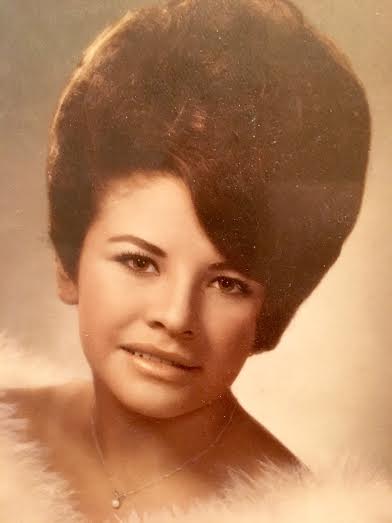
My mom’s high school senior photo.
My mother was born in the early 1950s in Fresno, Ca., the youngest of eight children. (An older sister died of pneumonia as an infant. Including her, it’s nine.) Her parents, my grandparents, immigrated from Mexico and, like so many Mexican immigrants to California, made their living as farm workers in the Central Valley. For my mom and her siblings, this would mean growing up and missing significant periods of time of school in order to work in the fields. This occurred mainly before Cesar Chavez led the farm workers’ movement for better pay and working conditions. Essentially then, my mom grew up in poverty and at a time of great inequality and discrimination against the immigrant, farm worker and Mexican-American communities. Several of my mom’s siblings didn’t finish high school, due to these conditions. My mom, fortunately, did graduate high school and it was there she met my dad.
My dad was drafted into the Army during the Vietnam War in the late 1960s. A few years after his tour ended, he married my mom in a big, fancy wedding. Both were fortunate enough to find stable and good paying jobs early in their adult lives. My dad would work for more than thirty years with a utility company and my mom would work more than fifteen with the State of CA. Within four years of marriage, my parents would have two children, me and my sister. Hard working, my mom still made time to play an active role in our education. With mine, in particular, I remember her being a strong supporter of and advocate in both my academic and sports lives. During high school, she intervened several times when I wasn’t performing well academically. I had several meetings with her and my counselors. When she felt baseball coaches were playing favorites too much with players, at the expense of my playing time and that of others, my mom questioned the coaches about it at a parents meeting. Other parents thanked her for it after. She also was president of my high school’s Mexican-American cultural club.
My mom beamed with joy when I received my BA and then my MA degree. It was only a few years after that, though, that my mom would start showing glaring signs of her serious mental illness. By then, my parents were divorced and my mom was laid-off from her job. I haven’t been able to spend much quality time, as a mature adult, with my mom. Her mind is fractured, not unlike a glass window or mirror. I still see many of her positive attributes many times, notwithstanding. She’s kind, intelligent, funny, curious about the world and is as articulate a person as I’ve ever known. Someday, I hope my sister, our extended family and my mom’s friends can sit and laugh together again like we used to, before her illness took over.

 I was fortunate enough to have one of my blog posts promoted by well-known mental health advocate and writer Pete Earley. Pete has written a number of books, including two on mental illness. His book, Crazy: A Father’s Search Through America’s Mental Health Madness, is based on his own experience with trying to get psychiatric treatment for his son. I had actually read the book some years ago when I first started trying to get help for my mom. It truly is a fascinating read and remains one of the most valuable resources I’ve come across in learning what my family and I are up against. Pete was also very warm through our communication. He even sent me an autographed copy of his book Crazy. I’d encourage anyone interested in mental health reform to read the book and subscribe to his blog: http://www.peteearley.com/blog/
 I was quite surprised, actually, by the amount of support and interest my family’s story generated, on Facebook in particular. It received more than 1000 “reactions”, 167 shares and almost 100 comments. The comments provided me with helpful feedback. Overwhelmingly, the comments were religious in content and highly supportive. My mom’s illness takes very religious and cultural forms. Indeed, she has always been a devout Christian. This response definitely makes me think I should touch on more of the religious aspect of her life, and religion and mental illness as a subject matter. It’d be challenging, but it’s worth the try.



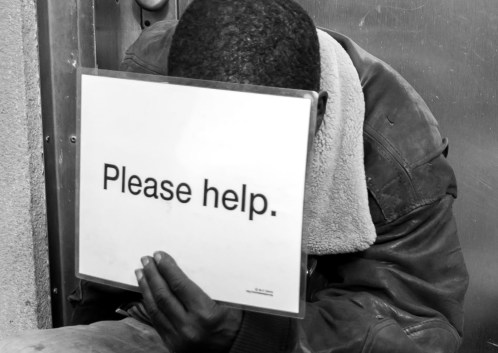 We undoubtedly need more and better studies on the connection between violence and SMI, in order to better inform our policy and political decisions and change the way we as a society think about mental illness. Ignorance and fear leads to stigma, and the reality is that people with SMI and their families need more compassion and access to MH treatment and services than what is currently being provided. Violence, after all, takes various forms. Leaving people alone to suffer from their hallucinations and delusions is a form of violence. Leaving family members alone to deal with and try to help them is also violence, a psychological torture really. As long as this situation is allowed to continue, then nobody’s hands are truly clean.




 benevolent neglect